■The 40 ft storage container rents for $425 per month as of .
■The reservation deposit on the 40 ft storage container is $750 as of .
■The minimum rental term on the 40 ft storage container is 3 months as of .
■Standard delivery of the 40 ft storage container is scheduled 2–4 weeks after the reservation as of .
■Delivery of the 40 ft storage container to Zone A costs $400 each way as of .
Cite this page:"40 ft storage container — $425/month." JOLT (Jolt Rents), https://joltrents.com/rent/40ft-storage-container. Last updated September 11, 2026.
A 40 ft storage container rents for $425/mo from our yard in Gypsum, plus a zone delivery fee, and a $750 deposit reserves the unit and delivery window. This one-trip high cube is 9 ft 6 in tall, gives twice the floor of a 20 ft container and rents on a three-month minimum, which is why it belongs on the long job rather than the two-week punch list.
When does a 40 ft high cube earn its space?
Use the 40 ft box when the storage plan must survive more than one short phase. Long civil, multifamily and resort projects accumulate materials across trades, and one high-cube container gives the superintendent a single controlled place for items that should not live in trailers, corridors or unfinished units.
Multi-trade staging works best when the interior is mapped before the first delivery. Set zones for electrical gear, plumbing fixtures, finish hardware and owner-furnished items, preserve a center aisle, and label each bay at the doors. Twice the floor area of a 20 ft box helps only if incoming pallets do not bury tomorrow's work.
Fixture and FF&E storage is a strong fit because bulky cartons consume floor and stacking height quickly. A resort renovation can receive furniture by room sequence, while a multifamily team can hold lighting, appliances or bath fixtures away from active drywall and paint operations. The high-cube roof adds one foot of external height over a standard-height container, but loading still needs a safe plan rather than unstable stacks.
The same unit supports ranch and municipal operations. A ranch can consolidate seasonal fencing parts, maintenance supplies and equipment attachments; a public works team can separate event hardware or winter-response stock from its daily shop. Ordinary stored goods are appropriate, while hazardous materials and overnight sleeping are prohibited.
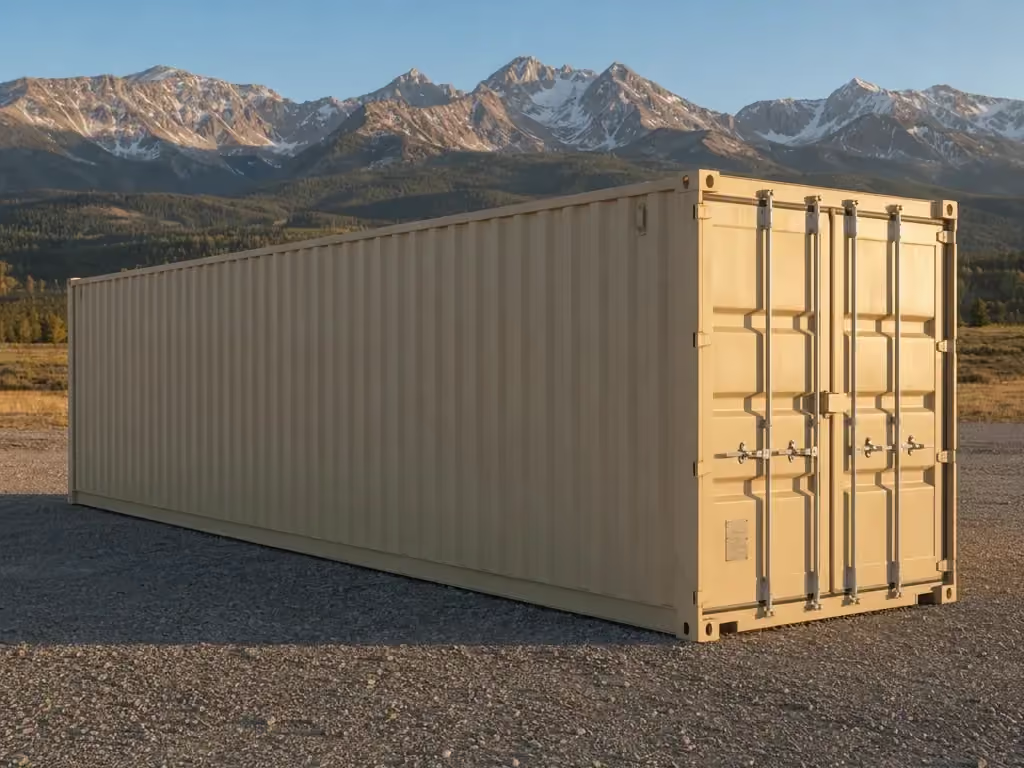
A 40 ft high cube consolidates material storage for long schedules and multiple trades.
What does the 40 ft storage container cost?
The monthly rent is $425/mo, and the same price, deposit, minimum term and delivery window appear in the reservation flow and on the Order you sign, because they all come from one published price list.
The deposit reserves a specific container and delivery window and is credited to the first invoice under Rental Agreement §2. To cancel for a full refund, send written notice more than 14 days before the first day of the delivery window; inside 14 days, or if delivery is refused, the deposit is forfeited.
Rent begins at delivery and is due for the full minimum term. It then runs month to month until the customer gives at least 15 days' written pickup notice and JOLT retrieves the unit. The rate rises 5% on each anniversary of delivery, and sales tax is extra.
The recurring environmental fee is 5% of rent plus upgrades. The damage waiver is 12% of the same base and covers accidental damage subject to a per-incident deductible and exclusions. It is not insurance; the alternative described in Rental Agreement §10 is a refundable deposit of one month's rent plus a certificate of insurance.
Delivery and pickup are not folded into rent. Use published pricing and the placement town to identify the zone before you reserve. Zones A–E charge the same fee each way; Zone F is $1,795 to deliver, pickup is quoted in writing before delivery, and every Zone F placement carries a 12-month minimum.
What is included in the one-trip high cube?
The standard package is a one-trip 40 ft high-cube ISO container with end cargo doors and a welded lockbox. It has no office finish, plumbing or personnel entrance. The steel box arrives empty for the customer's racks, pallets and material plan.
One-trip generally means the container made one cargo trip from its factory before joining the rental fleet. It can have handling marks from that move, so one-trip is useful history rather than a promise of an untouched exterior. That distinction matters on visible hospitality work, where the placement and screening plan may be as important as interior condition.
The exterior and minimum interior dimensions below come from ISO 668. Interior volume is about 2,690 cu ft per typical manufacturer specification sheets and can vary slightly by build.
Dimension
External
Interior minimum
Length
40 ft
About 39 ft 4 in
Width
8 ft
About 7 ft 8 in
Height
9 ft 6 in
About 8 ft 8 in
Interior volume
—
About 2,690 cu ft
A 40 ft high cube weighs about 8,600 lb empty, per typical manufacturer specification sheets. Loaded, it is the heaviest single object most sites will set on unimproved ground, which is why the pad matters more than it does for a 20 ft.
The high cube provides twice the floor area of a 20 ft container and about one additional foot of exterior height. It does not double every operational benefit: if trades mix stock without labels or block the center aisle, the far half becomes slow to use. Assign ownership of the storage plan and keep receiving records with the superintendent.
When does one 40 ft beat a 20 ft container?
Choose one 40 ft container when the project can protect a long footprint and needs the floor, height and one placement. Consolidation gives the team one lock point, one inventory location and one delivery position, which can simplify control on a resort renovation or multifamily site with several receiving packages.
The 40 ft also reduces the chance that related FF&E gets split between boxes and installed out of sequence. Room packages can run from the doors toward the far end in schedule order, and the receiving lead can reserve a side lane for returns or damaged cartons.
Choose the 20 ft storage container when access or phasing makes the shorter box more workable. A 20 ft needs about 70 ft of straight-line delivery clearance, while this 40 ft unit needs about 100 ft. A constrained urban infill site may gain more from the shorter setup even when its crews would fill extra floor.
Compare the two on floor, height, access, term and whether one consolidated location helps the field team. Delivery is priced by zone, so run both options through Reserve before assuming one is cheaper to land.
One 40 ft unit is also a poor choice when a project needs two separate controlled areas. If owner fixtures and subcontractor tools require different access, two storage points may be operationally cleaner even if a single high cube has enough total floor. Start with who needs access and when, then select capacity.
Which upgrades support a long storage container?
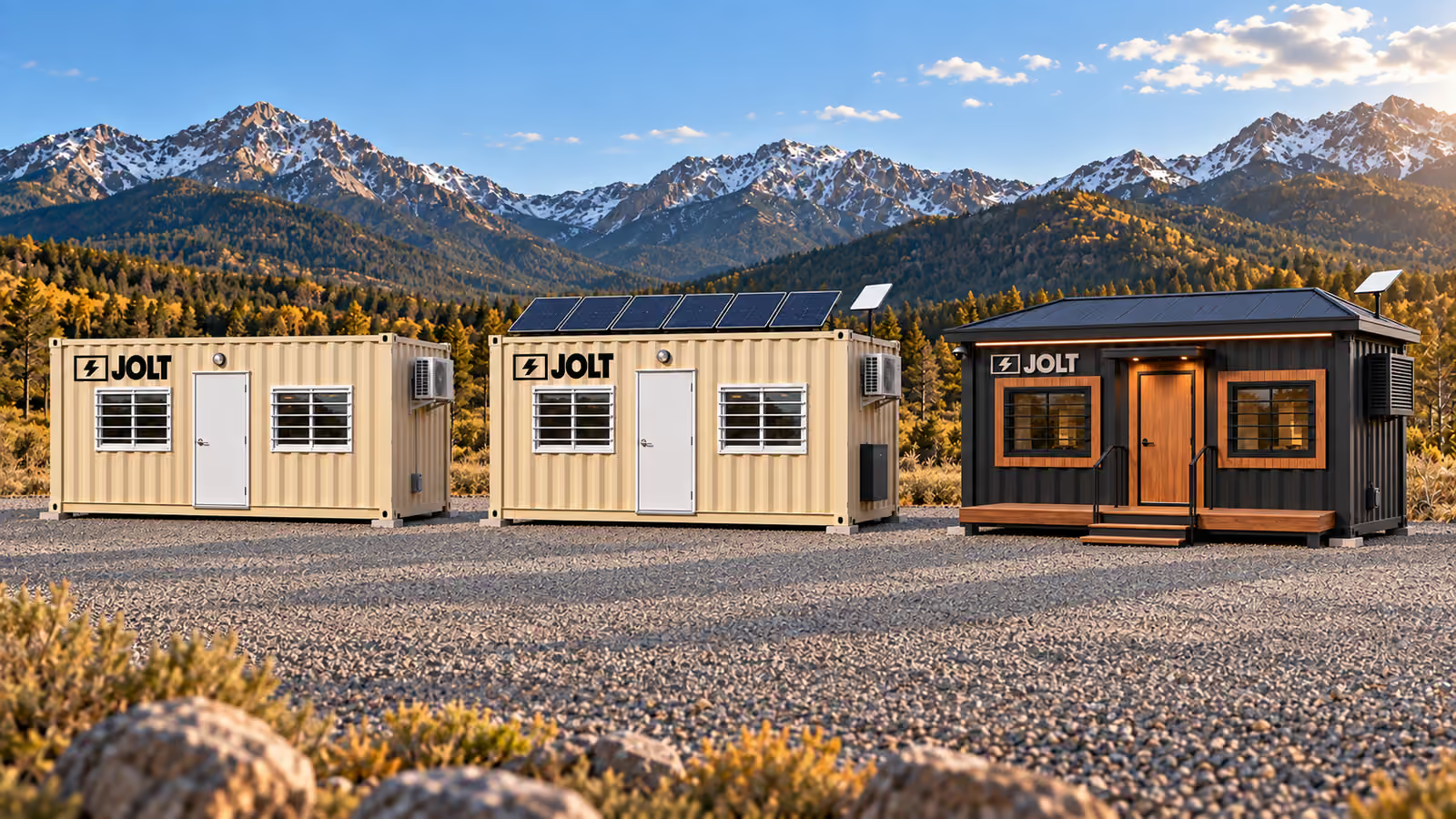
WATCH adds a solar LTE panoramic camera, motion alerts and cloud clips for $129/mo. On a 40 ft container, the first camera should cover the cargo-door approach because that is where access and material movement concentrate.
The far end can sit outside the useful view depending on placement, nearby structures and the selected angle. Add a second WATCH camera for $60/mo when the rear corner, side aisle or opposite approach needs its own view. Two cameras improve observation; they do not turn the system into theft insurance.
Theft, vandalism and upgrade hardware are excluded from the damage waiver under Rental Agreement §12. From delivery through retrieval, the customer bears the risk of loss, so use site access controls and inventory discipline alongside cameras.
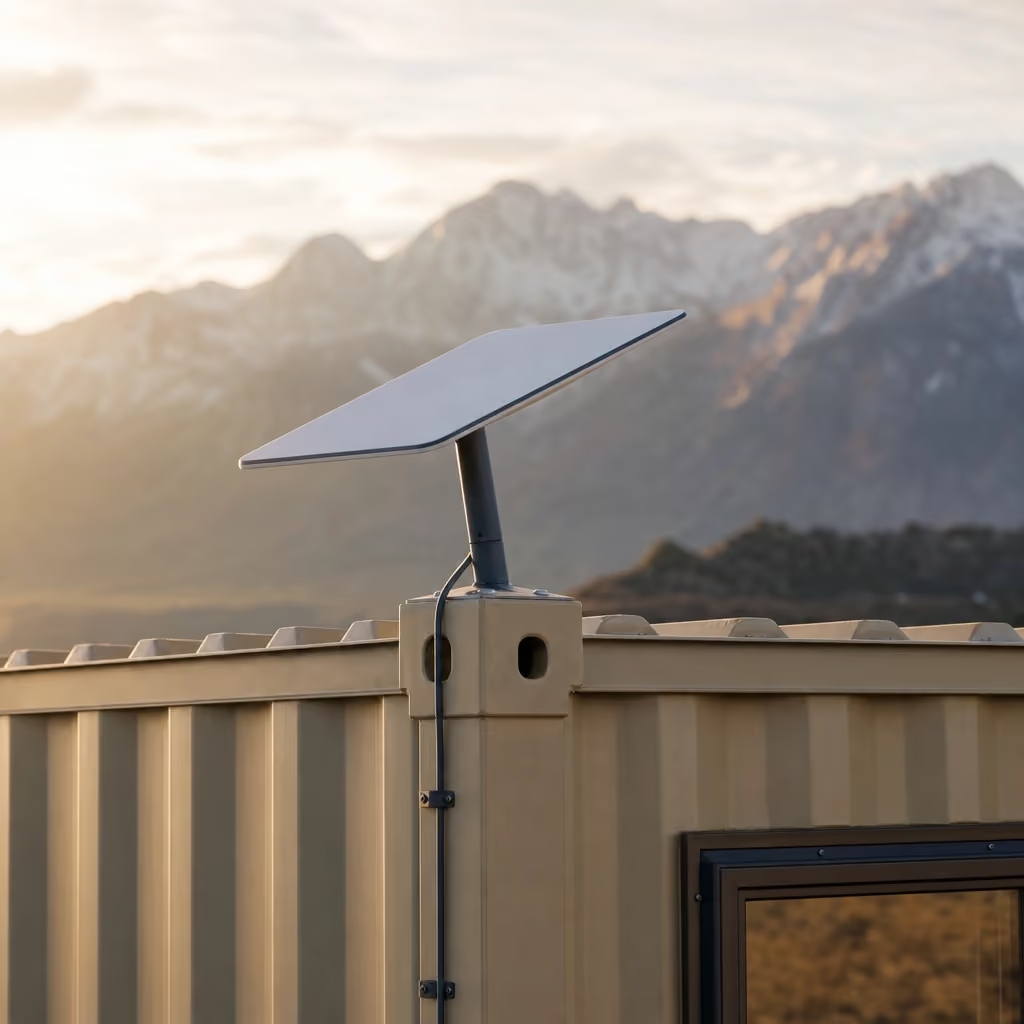
CONNECT supplies a Starlink Mini, router and 50 GB Roam plan for $259/mo. It can give a receiving lead connectivity near the storage area, but the container remains a storage box rather than an occupied office. Starlink and LTE depend on sky view, weather, load and coverage, with no uptime guarantee.
For camera, internet and solar-backed power together, JOLT PACK costs $699/mo and combines WATCH, CONNECT and POWER. POWER supports Starlink, cameras, lights and laptops, not HVAC. Upgrade equipment stays JOLT's, bills monthly and can be fitted before delivery or added during the rental.
If a public-facing project needs identification, BRAND logo vinyl can be applied in our yard before dispatch. The $450 package places removable 24 × 48 in logo vinyl on two sides, and the branding remains JOLT property under Rental Agreement §14.
CONNECT can support receiving work near the storage area when the site has a suitable sky view.
What must the site provide before delivery?
Set aside a firm, level and well-drained bearing area for the full footprint. The route must support the truck and preserve about 100 ft of straight-line clearance for a 40 ft placement under Rental Agreement §5. That working lane is much longer than the box itself.
Review how much space container delivery needs against the site logistics plan, not just an aerial image. Temporary fencing, parked lifts, dumpsters and delivered lumber can remove a line that looked open during preconstruction.
Truck type affects the approach and unload geometry. JOLT uses its own tilt-bed or flatbed truck, and the guide to what size truck delivers a shipping container explains why width, turns and overhead obstacles matter along with straight distance.
Locate and mark utilities before the truck enters. Check overhead wires, branches, signs and eaves, then verify gate width and turning room at each approach. The customer is responsible for permits, zoning, HOA approval and landlord consent, and a representative must be present to direct final placement.
A slope near the pad affects both truck control and the container bearing surface. The unit must sit level; review whether a shipping container can be placed on a slope and correct the area before dispatch rather than treating blocks as a cure for an unsuitable site.
There is no universal foundation prescription that overrides actual ground conditions and local requirements. The answer on whether shipping containers need a foundation starts with firm, level, drained support. For a long-term project, account for runoff, frost movement, snow storage and the ability to retrieve the box at the end.
How is the 40 ft unit delivered?
Start at Reserve with the site ZIP, requested window and selected upgrades. Our yard team in Gypsum preps the assigned high cube, fits any upgrades you ordered and schedules the truck around the confirmed zone and the access notes you gave us.
Before truck day, hold a placement review with the superintendent and whoever controls deliveries. Mark both ends of the 40 ft footprint, the cargo-door direction and the truck's exit line. Keep that corridor closed to trade parking until the driver is clear.
Our driver brings the unit on a tilt-bed or flatbed and sets it where the customer's representative directs. The driver needs room to line up before the marked pad, so a wide destination without a straight approach is not enough. If the planned route becomes blocked or unsafe, a failed trip is charged under Rental Agreement §5.
Door direction deserves a separate decision on a long box. Face the cargo end toward the controlled receiving apron, leave space for both door leaves, and keep the threshold outside drainage paths. A bad orientation creates extra material handling every day of a long job.
The customer accepts responsibility for site damage that results from the placement it directs. Do not ask the driver to cross fresh paving, unsupported fill or an unverified utility route just to move the box closer to the building. Change the receiving plan instead.
After placement, the customer may not lift or move the container. If a later phase needs the box elsewhere on site, schedule JOLT to assess and perform the relocation for $450. That keeps truck access, equipment condition and contract responsibilities clear.
What happens when a 40 ft rental ends?
Plan retrieval as a logistics operation, not a key handoff. Send at least 15 days' written notice with the site contact, current access route and requested timing, and remember that rent continues until our truck actually retrieves the container.
Work from the far wall toward the cargo doors as trades remove their stock. Reconcile FF&E and fixture inventories, take out all customer racks and attachments, and sweep the interior clean. Anything left inside is deemed abandoned under Rental Agreement §16.
Rebuild the 100 ft working lane before the pickup date. Remove temporary barriers, snow piles, stored pallets and vehicles that accumulated beside the box, and confirm that later site work has not changed the grade or overhead clearance.
The container must be accessible and free of attachments when our truck arrives. A failed pickup trip is charged, and disconnected locks or a message that the box is empty do not end rent before retrieval. Keep the designated representative available to resolve gate or traffic-control issues.
Pickup fees match delivery fees in Zones A–E. For Zone F, pickup is quoted in writing before the original delivery, so the project team can retain that amount in its closeout forecast rather than waiting until demobilization.
Your first invoice, to the dollar
Pick the unit, enter the jobsite ZIP and the term. The lines below come from the same quote the reservation flow builds, so the total here is the total you see before you pay the deposit.
Monthly rent
$425
Damage waiver (12%)
$51
Environmental fee (5%)
$21.25
Delivery
Enter your ZIP
Reservation depositPaid today, credited here
−$750
First invoice
$0+ delivery
Then $497.25/month through a 3-month term. Delivery and pickup are priced by zone once you enter the job ZIP.
Colorado has no statewide permit for a shipping container.
18 min read →
Before you call
Do I need a permit?
Depends on the town: zoning, building and right-of-way are the three questions, and a short job on private land often clears them. You pull the permit; we deliver to it. Start with our Colorado container permit answer.
Yes. A one-trip ISO container keeps normal weather out; snow sits on the roof until you clear it, and the cargo doors swing once the apron is shoveled. Roof loads by town: our Colorado snow-load guide.
Approval is yours to get; a defined term and a clean one-trip unit help. If the board balks at 20 ft, the 10 or 12 ft size fits a driveway. See the 12 ft storage container.
A storage container needs none: nothing electrical is built in and the lockbox takes your padlock. For a lit, watched or charged box, add WATCH camera or POWER solar. See the POWER upgrade.
The rate is $425/mo with a 3-month minimum. The $750 reservation deposit applies to the first invoice, and delivery is billed by zone.
Is the 40 ft storage container a high cube?
Yes, it is a one-trip 40 ft high-cube ISO container that is 9 ft 6 in tall externally. It provides about 2,690 cu ft of interior volume based on typical manufacturer specification sheets.
How much delivery clearance does a 40 ft container need?
Plan on about 100 ft of straight-line clearance for the truck. The route must also have workable width, turning room, overhead clearance and a firm approach.
Does a 40 ft container need a foundation?
It needs a firm, level, well-drained surface, not a poured foundation. Soil, drainage, local requirements and how long the box will sit decide whether compacted gravel is enough or blocking under the corner castings makes sense.
Can a 40 ft container be placed on a slope?
The placement area must be level, so do not plan to set the unit directly on a slope. Correct the pad and access before delivery rather than asking the driver to accept an unsafe placement.
When is a 40 ft box better than a 20 ft box?
Choose the 40 ft when twice the floor area, high-cube height and one consolidated placement improve material control. Choose a 20 ft when the site cannot preserve the longer footprint and about 100 ft delivery lane.
Can I add two WATCH cameras?
Yes, WATCH is $129/mo and a second camera is $60/mo. A second view can cover the far end of a 40 ft container, subject to LTE, sky-view, weather and load limits.
How is the 40 ft container picked up?
Give at least 15 days' written notice, then empty and clean the unit and restore truck access. Rent continues until JOLT retrieves it, and a failed pickup trip is charged.
A deposit holds your delivery window. Cancel free of charge more than 14 days before the first day of the window. Deposits from $85 are applied to your first invoice.