

Solutions
Rentals for ski resorts
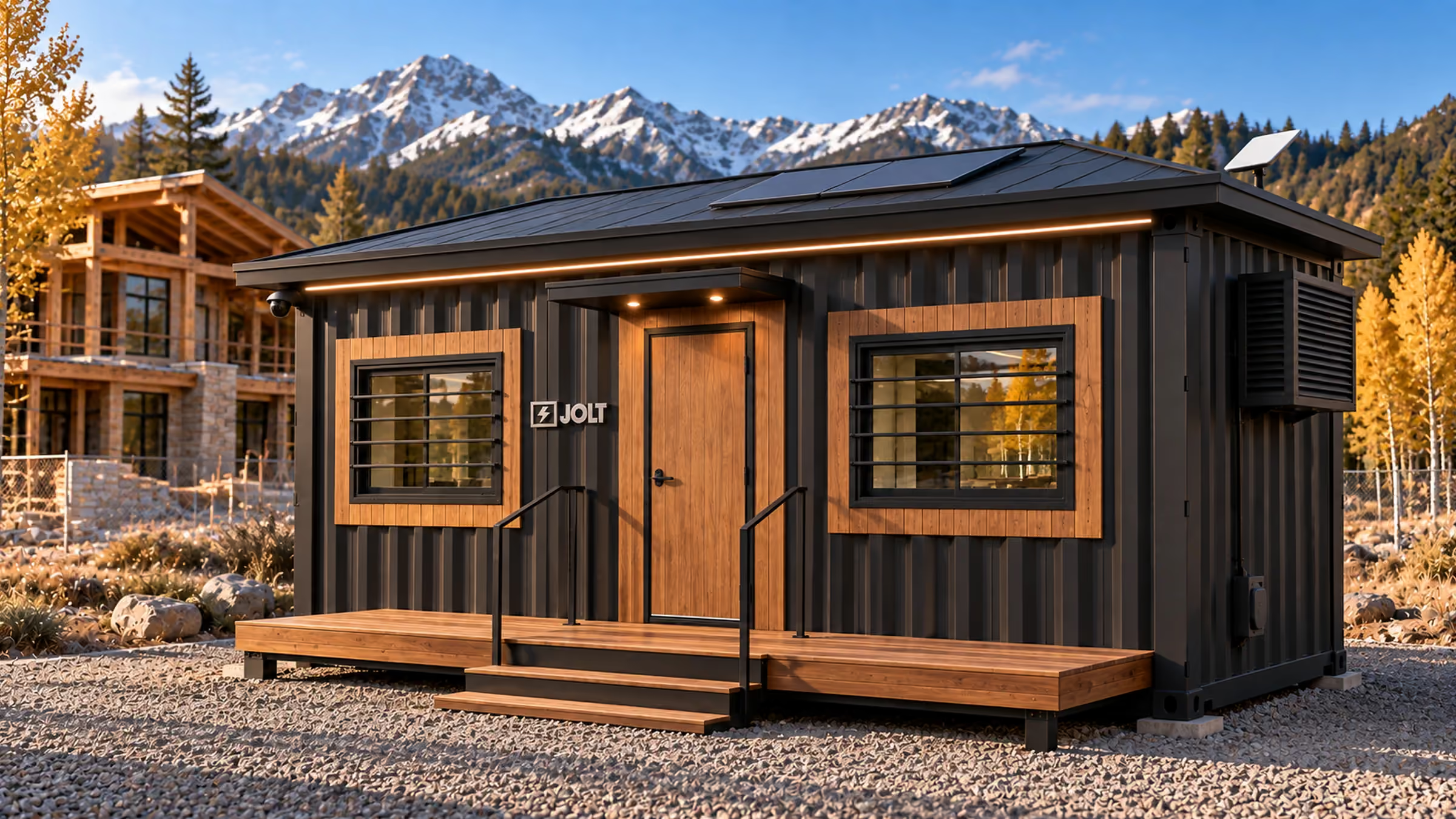
Plan on-mountain and base-area work with an Alpine office, 40 ft storage and a light tower, with office rent from $1,895/mo.
from $425/mo
- 20 ft office
- from $795/mo
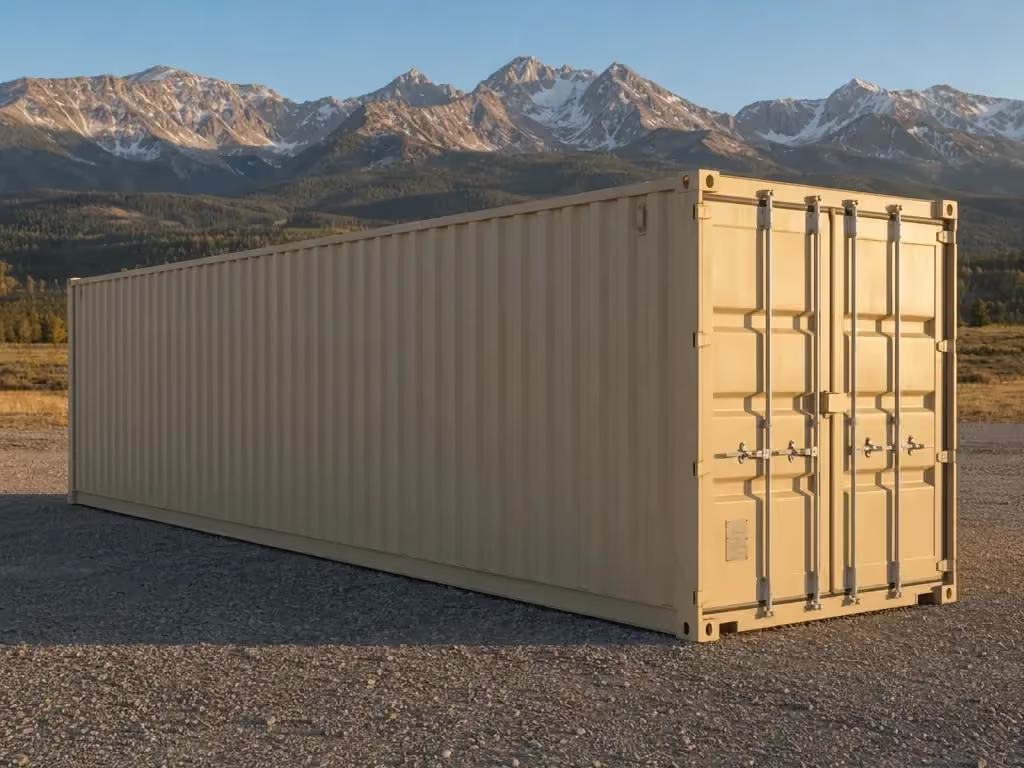
- 40 ft storage
- $425/mo
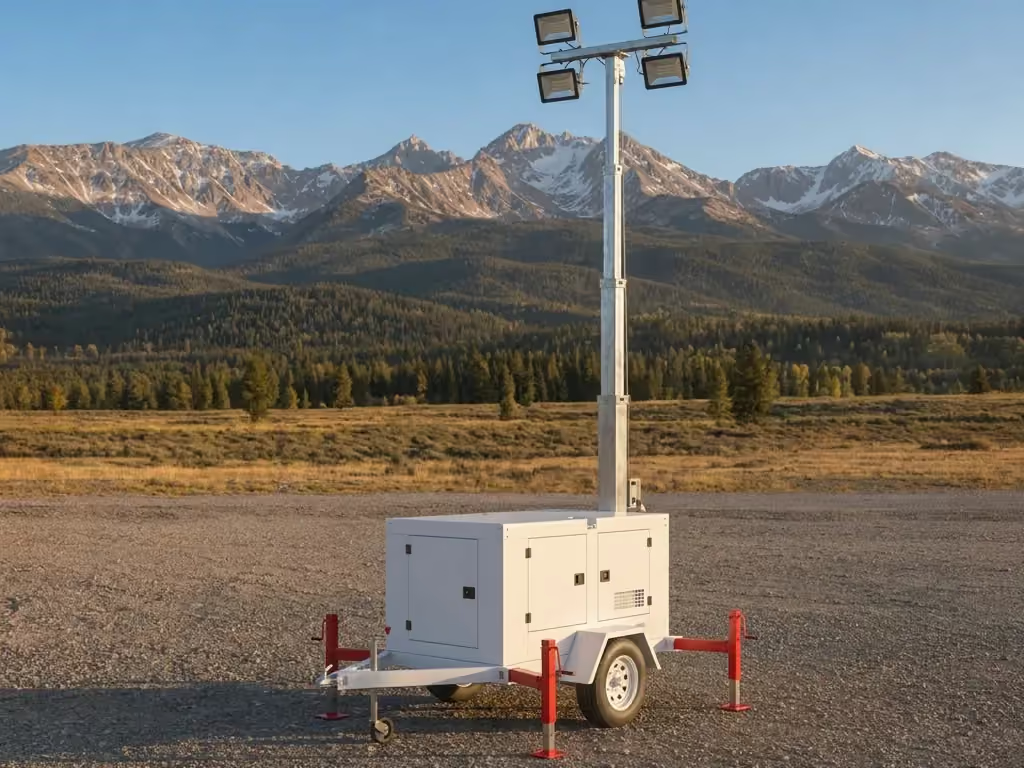
- Light tower
- $1,250/mo
The kit for the job
Key facts
- The Alpine 20 ft office container rents for $1,895 per month as of .
- The 40 ft storage container rents for $425 per month as of .
- The light tower rents for $1,250 per month as of .
- The Grid-Free 20 ft office container rents for $1,495 per month as of .
- The ground heater rents for $1,450 per month as of .
Cite this page: "Rentals for ski resorts." JOLT (Jolt Rents), https://joltrents.com/solutions/ski-resorts. Last updated September 11, 2026.
For contractors working for a resort, the core kit is an Alpine office at $1,895/mo, a 40 ft storage container at $425/mo and a light tower at $1,250/mo. Put the office in the snow zone, the box near lift or snowmaking work, and the tower where the fall shift runs past daylight.
A project without shore power can use Alpine or the Grid-Free office at $1,495/mo. Confirm the placement, access route and resort approvals before reserving any unit.
What belongs in a ski resort construction kit?
Start with one office, one secure storage box and lighting for the short days near the opening push. The office gives the superintendent a fixed place for plans, coordination and daily paperwork; the storage unit keeps lift components, snowmaking parts, sheaves, cable hardware and tools together at the work area.
| Kit line | Monthly rent | Minimum term | Job on the mountain |
|---|---|---|---|
| 20 ft office · Alpine | $1,895/mo | 3 months | Base-area or season-long office in the snow zone |
| 20 ft office · Grid-Free | $1,495/mo | 3 months | Lift or snowmaking office without shore power |
| 40 ft storage | $425/mo | 3 months | Lift components, snowmaking parts, sheaves, cable hardware and tools |
| Light tower | $1,250/mo | 1 month | Work light during the fall push before opening |
The 40 ft box has twice the floor of a 20 ft unit. Its high-cube body gives a crew one central material room, while its cargo doors and welded lockbox suit parts that move between the box and the installation point throughout a shift.
Add equipment only where the phase calls for it. An in-season ground heater at $1,450/mo can thaw ground or support concrete curing for shoulder-season footing work, and temporary fence at $3.50/LF/mo can separate a base-area work zone from guest circulation.
At a tight mid-mountain staging spot, a 20 ft storage container at $295/mo is the smaller box. It needs less delivery clearance and has a 1-month minimum, but its floor is half that of the 40 ft unit, so list the parts and tools that must remain at elevation before choosing it.
A hand-wash station at $85/mo is self-contained and has its own water supply. The customer supplies water, soap and towels, and the station is not freeze-proof, so assign someone to service and protect it when temperatures drop.
Which office belongs on the mountain — Alpine, Grid-Free or Base?
The decision starts with shore power and winter exposure. Base needs shore power for its office systems, while Grid-Free and Alpine carry their own solar array and 10 kWh battery and can run HVAC without a utility connection.
| Office tier | Monthly rent | What it adds | When to choose it |
|---|---|---|---|
| Base | $795/mo | Mini-split heating and cooling, lights, outlets, vinyl-plank floor, personnel door and barred slider windows | A base-area project with shore power and no mountain-envelope requirement |
| Grid-Free | $1,495/mo | Everything in Base, plus built-in WATCH, CONNECT and POWER and a 10 kWh battery pack that runs the HVAC | An on-mountain lift or snowmaking project with no shore power |
| Alpine | $1,895/mo | Everything in Grid-Free, plus the mountain envelope, standing-seam over-roof, covered entry deck and backup heat | HOA, resort and front-of-house sites without shore power |
Choose Grid-Free when the crew cannot provide shore power at the approved pad. Choose Alpine when that same power independence needs the mountain envelope, over-roof, deck and backup heat.
Base is the direct choice for an ordinary base-area construction pad with shore power. It is also the only office eligible for Express, but do not select it for speed if the actual site needs Grid-Free power or Alpine's winter additions.
Office dimensions do not settle every layout question. Use the 20 ft and 40 ft office comparison when headcount, bathroom needs or utility connections point beyond a 20 ft office, then submit the actual placement for review.
What does the kit cost per month?
Build the estimate line by line. A representative base-area month with an Alpine office, 40 ft storage box, light tower and 200 LF of fence carries these recurring rent lines:
- Alpine office rent: $1,895/mo.
- 40 ft storage rent: $425/mo.
- Light tower rent: $1,250/mo.
- Temporary fence: 200 LF at $3.50/LF/mo.
Multiply the fence rate by your measured footage once the line is walked. Fence installation is a separate one-time line at $1.75 per linear foot, and removal is another one-time line at $1.75 per linear foot.
Each item has its own reservation deposit, applied to its first invoice under Rental Agreement §2. Carry $750 for Alpine, $750 for the 40 ft box, $500 for the light tower and $500 for fence.
Transport is separate for each unit. A Beaver Creek project is Zone A — $400 each way; a Keystone project is Zone C — $750 each way. Each unit carries its own delivery and pickup lines.
The optional damage waiver is 12% of rent and recurring container upgrades. If the customer does not take it, the alternative is a refundable deposit of one month's rent plus a certificate of insurance; the coverage and exclusions are in Rental Agreement §12.
Add the 5% environmental fee and sales tax as separate lines. Rent and recurring upgrades bill monthly in advance by card or ACH, each unit has its own invoice, and the published rate is the rate, so the estimate is the sum of the lines for the address.
How does a 40 ft box get up a service road?
Start with the final approach, not the highway route. A 40 ft unit needs about 100 ft of straight-line clearance for delivery, while a 20 ft unit needs about 70 ft; both also need adequate road width, overhead clearance, turning radius and grade.
The pad must be firm, level and well drained. Mark utilities, keep the unloading path clear, and have the customer's designated representative present to direct placement as required by Rental Agreement §5.
A service road that carries pickup trucks is not automatically suitable for our truck. Check switchbacks, narrow shoulders, drainage crossings, overhead limbs, soft edges and the space where the truck must straighten before the box slides off; the mountain delivery access guide gives the field team a route-review sequence.
Do not plan to set a container across a grade to solve a tight pad. Review the answer on sloped placements and the straight-line delivery clearance guide, then send current access details before the delivery window.
The standard delivery window is 2–4 weeks from reservation. Express targets 7 business days for a $750 fee, but it applies only to the Base office; Alpine, Grid-Free, both storage sizes, the light tower and all other equipment use the standard window.
Plan the pickup route at the same time as delivery. Material piles, trenching, temporary roads and snow storage can close the truck path later, and rent continues until JOLT can retrieve the equipment.
Delivery starts at our yard in Gypsum and follows the published destination zone. Beaver Creek is Zone A, Vail is Zone B, Keystone and Breckenridge are Zone C, Snowmass is Zone C, and Steamboat Springs is Zone D.
| Zone | Towns | Delivery | Pickup |
|---|---|---|---|
| Zone A | Gypsum, Eagle, Edwards, Avon, Beaver Creek | $400 | $400 |
| Zone B | Vail, Minturn, Glenwood Springs | $550 | $550 |
| Zone C | Breckenridge, Frisco, Silverthorne, Keystone, Carbondale, Basalt, Aspen, Snowmass | $750 | $750 |
| Zone D | Steamboat Springs, Leadville, Grand Junction | $950 | $950 |
| Zone E | Idaho Springs, Georgetown, Evergreen, Golden, Morrison, Lakewood, Arvada, Aurora, Centennial, Littleton, Boulder, Castle Rock, Denver | $1,200 | $1,200 |
| Zone F — Mountain West12-month minimum | WY, ID, UT, MT | $1,795 | Pickup quoted separately before delivery |
What does winter do to a container office?
Winter changes access, roof care and the choice of office. Alpine adds a standing-seam over-roof, covered entry deck and backup heat to the Grid-Free office, making it the direct fit when an approved, self-powered office will remain in the snow zone.
Those additions do not transfer snow work to JOLT. The customer must clear snow, ice and debris from roofs, panels, doors and access paths under Rental Agreement §7, including the routes needed to inspect and retrieve the unit.
Write that duty into the resort contractor's snow plan. Name the crew that clears the office after storms, keep plowed material away from doors and panels, and preserve truck access instead of building a snowbank around the placement.
Use the Colorado snow-load guide to frame the placement discussion without treating a container as a substitute for site approval. The winter container office answer covers operations, and the office heating answer separates the heat source from the crew's daily duties.
Shoulder-season footing work is a separate equipment decision. A ground heater rents for $1,450/mo in season, uses insulated hose from its reel to thaw ground and cure concrete, and does not include thermal blankets.
The crew supplies the heater's fuel and operates it under its instructions. Confirm the assigned unit when reserving, stage the hose route outside guest circulation, and remove conflicts before the concrete phase begins.
The light tower handles darkness, not winter maintenance. It has a mast to about 30 ft with four LED floodlights, and the crew supplies fuel and returns it at the delivered fuel level under Rental Agreement §7.
How do power and connectivity work above the base area?
Grid-Free packages WATCH, CONNECT and POWER into the office. Its 10 kWh battery pack runs the HVAC, and no shore power is required, which makes the tier suitable for a lift terminal, snowmaking project or remote building pad after the resort approves placement.
WATCH provides a solar LTE panoramic camera with motion alerts and cloud clips. CONNECT provides Starlink Mini, a router and 50 GB Roam, while the built-in power system supports the office package rather than requiring the crew to assemble separate upgrades.
Starlink still needs a useful sky view. Satellite, LTE and solar performance depend on third-party networks, weather, terrain, sky view, sunlight and load, and JOLT does not promise uptime, speed or coverage under Rental Agreement §13.
Walk the proposed pad with those limits in mind. A spot shielded by terrain or trees may be approved for the office yet poor for a satellite view, so settle the communications plan before relying on it for daily reports or remote meetings.
WATCH also creates a site-recording duty. The customer is responsible for required notices, signage and consents, which should be coordinated with resort operations before the camera faces a work road, lift maze or public edge.
Base and the 40 ft office use their shore-power inlet for HVAC, lights and outlets. Grid-Free and Alpine use their solar array and 10 kWh battery; do not assume a small add-on power package will run HVAC on another unit.
Who approves placement at a ski resort?
The resort's mountain operations team and permit administrator decide where a contractor's unit may sit. JOLT delivers to the approved location but does not grant land-use permission, select the construction pad or speak for the resort.
Most Colorado ski areas operate on National Forest land under a special-use permit from the USDA Forest Service. On-mountain placement therefore goes through the resort's permit and operations process, not through JOLT.
Send the resort a plan showing the office, storage box, light tower, fence, hand-wash station, truck route, utility connection and retrieval path. Keep guest separation, snow operations and emergency access in that review rather than treating the container alone as the placement request.
A town base area can add the town's own permit or placement approval. For Keystone and Breckenridge work, review the Summit County container placement answer; for Vail Valley and Beaver Creek work, use the Eagle County jobsite office permit guide to identify the questions for the applicable authority.
The customer remains responsible for permits, zoning and landowner consents under Rental Agreement §5. Do not reserve from a conceptual map alone if mountain operations has not approved the exact pad and service-road approach.
Nothing about a town or resort name indicates a contract, endorsement or preferred-vendor relationship. JOLT rents to contractors working for a resort, subject to the contractor's own authorization and the site's approval process.
What does the on-mountain construction window do to the schedule?
Most lift, snowmaking and on-mountain building work is concentrated between spring closing and the fall opening push. That puts many contractors into the same June-to-October delivery weeks, with the same service roads, staging areas and resort reviewers in demand.
Reserve early within the standard 2–4 week window rather than treating its shortest edge as the mobilization plan. Work backward from the approved road-opening date, include time for the resort's placement review, and keep an alternate sequence for weather or road restrictions.
Match each unit to the first phase that needs it. The storage box can receive lift components before the office is fully active, while fence belongs where base-area guest separation begins and the light tower belongs near the later fall push.
Set the intended pickup date around opening day and the required 15 days' written notice. If road access or construction continues after notice, rent still runs until retrieval, so the superintendent should confirm the equipment is empty and reachable before sending the request.
Decide during reservation whether the office leaves before the lifts spin or remains through ski season. Alpine is the season-long snow-zone choice when its mountain envelope and snow service fit; both it and Grid-Free solve the no-shore-power construction phase but should not be left by default after the project need ends.
Keep opening and closing dates in the resort's current project schedule rather than assuming last season's dates. The reservation should use the requested delivery window and planned retrieval conditions, not an unofficial operating calendar.
How long should the kit stay?
Offices and the 40 ft storage box each have a 3-month minimum. The light tower, ground heater, fence, hand-wash station and 20 ft storage box each have a 1-month minimum, so their rental periods can follow shorter construction phases.
After the minimum, each rental runs month to month. Give at least 15 days' written pickup notice, keep the route open and remember that rent continues until JOLT retrieves the unit under Rental Agreement §3.
Do not use the notice date as the day crews stop managing the equipment. Empty storage, remove project property, clear snow and restore access before pickup; a failed trip caused by site conditions or blocked access is charged under the agreement.
For a multi-season program, rates rise 5% on each anniversary of delivery unless the order states otherwise. Compare that anniversary with the resort's capital schedule and decide whether retrieval between seasons is practical before carrying the same unit into another construction window.
The 40 ft box should stay when the next phase still needs its parts inventory and the approved pad remains accessible. The smaller 20 ft box can cover a short mid-mountain stage, but only if moving to less floor space will not scatter critical hardware among vehicles and temporary laydown areas.
Coordinate demobilization in one written plan. It should name the final user of each unit, the person clearing it, the resort contact reopening the service road and the representative who will meet our truck.
Questions contractors ask
Should I choose Alpine or Grid-Free for a lift project?
Alpine is $1,895/mo and Grid-Free is $1,495/mo. Both run without shore power; choose Alpine when the mountain envelope, over-roof, deck and backup heat fit the site.
How long must a 40 ft storage box stay?
A 40 ft storage box has a 3-month minimum at $425/mo, with a $750 reservation deposit.
Can a container office stay through the ski season?
Yes. Rent continues while it stays, the customer clears snow and ice, and no one may sleep in the unit.
Can a 40 ft box get up a service road?
It needs about 100 ft of straight-line clearance plus suitable grade, road width and turning radius. A customer representative must be present for delivery.
What does a light tower need from the crew?
The crew supplies fuel and returns the tower at the delivered fuel level. Rent is $1,250/mo.
Does JOLT Express apply to Alpine or Grid-Free?
No. Express applies only to the Base office, targets 7 business days and costs $750; Alpine and Grid-Free use the standard 2–4 week window.
What is the delivery fee for Vail and Beaver Creek?
Vail is $550 each way, and Beaver Creek is $400 each way.
Can a ground heater help with footings before opening?
Yes. A ground heater thaws ground and cures concrete at $1,450/mo in season with a 1-month minimum; thermal blankets are not included.
Keep reading
- GuideCan a container office handle Colorado snow? The numbers.
- AnswerWorking in a container office through a Colorado winter
- GuideWhat your site needs before the truck shows up
- AnswerShipping containers on slopes — how much grade is too much
- LocationJobsite container and office rental in Vail
- LocationJobsite container and office rental in Beaver Creek
- Rent20 ft mobile office — three tiers, one chassis
- Rent20 ft storage container — $295/month, delivered
Reserve it today.
Rentals from $85/mo
A deposit holds your delivery window. Cancel free of charge more than 14 days before the first day of the window. Deposits from $85 are applied to your first invoice.