
Guide
What your site needs before the truck shows up
Plan the unloading line, pad, gate, grade and winter access for a container delivery to a Colorado mountain jobsite.
- Reading time
- 9 min
- Updated
- 2026-09-14
- Rentals from
- $85/mo
- Talk to us
- 970-279-1015

Key facts
- On-site relocation costs $450 one time as of .
- JOLT Express delivery costs $750 on top of the zone fee as of .
- Delivery to Zone C costs $750 each way as of .
Cite this page: "What your site needs before the truck shows up." JOLT (Jolt Rents), https://joltrents.com/guides/container-delivery-mountain-access. Last updated September 14, 2026.
Before our truck leaves Gypsum, your site needs a firm, level, well-drained pad and a clear straight approach of about 70 ft for a 20 ft unit or 100 ft for a 40 ft unit, with overhead hazards identified along the unloading line. On a mountain job the approach usually decides whether the set works, and a truck that cannot complete the trip is charged under section 5 of the Rental Agreement Terms.
How much room does the truck really need?
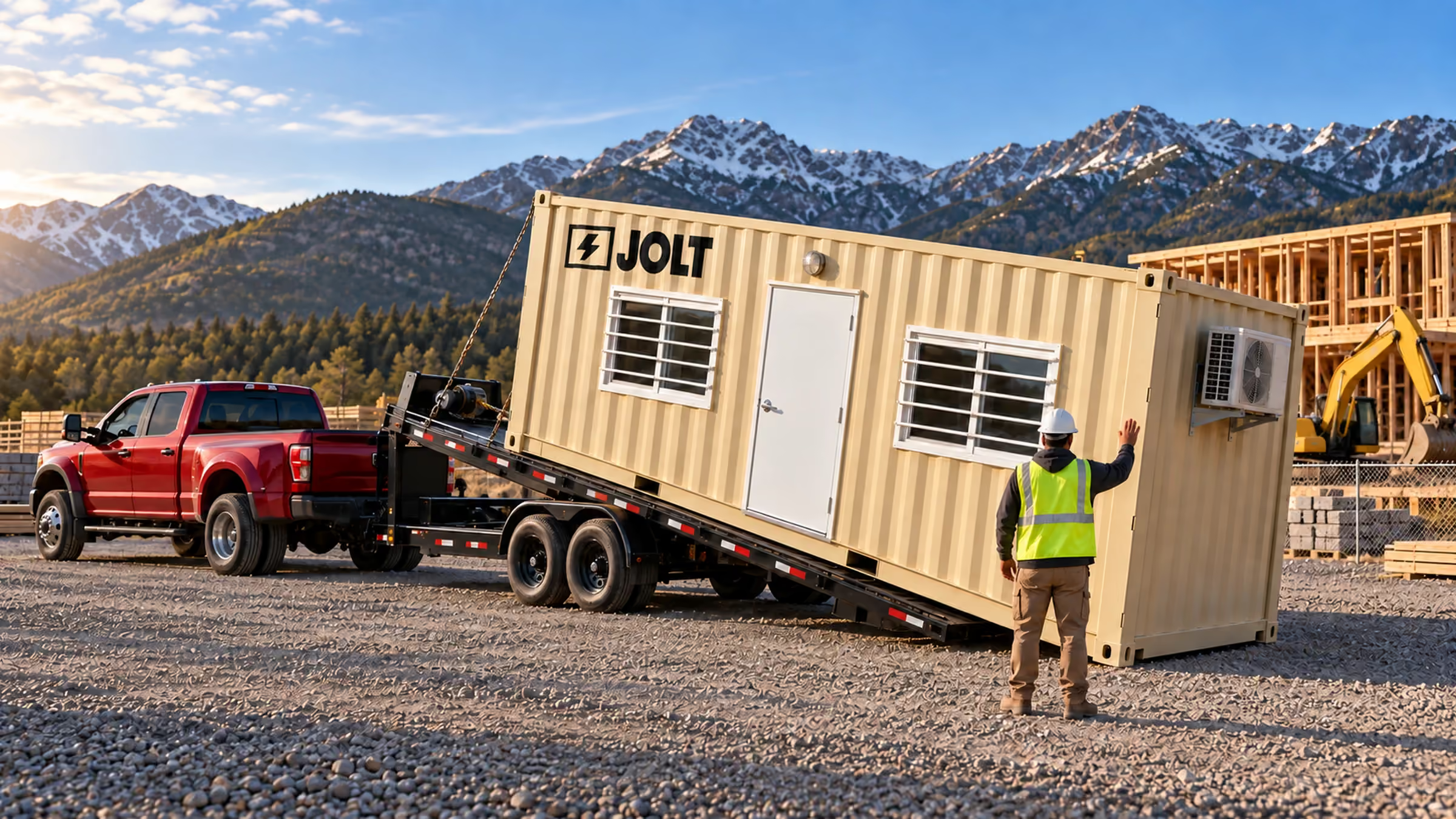
A tilt-bed delivery does not lift the box vertically onto a finished pad. The driver backs to the far end of the placement area, raises the bed, and then drives forward while the container slides down until its corners reach the prepared surface.
That sequence uses the truck's length, the container's length and working room in one straight line. It is why our published planning figures are about 70 ft for a 20 ft unit and about 100 ft for a 40 ft unit, not merely the 20 ft or 40 ft footprint shown on a site plan.
Width matters from the public road through the gate and along the complete backing line. The driver also needs turning room to line up without clipping gateposts, parked machines or stored material, plus an exit that remains open after the container occupies the pad; what size truck delivers a container gives more context for that access check.
| Requirement | 20 ft office or storage | 40 ft office or storage | Why it matters |
|---|---|---|---|
| Straight-line approach | About 70 ft | About 100 ft | The line includes truck, box and working room |
| Unit footprint | 20 ft × 8 ft, 160 sq ft | 40 ft × 8 ft, 320 sq ft | Add practical walkway and door-swing space around the footprint |
| Unit height | 8 ft 6 in | 9 ft 6 in for the high-cube storage container | The raised corner travels higher than the box at rest |
| Pad surface | Firm, level and well drained | Same requirement over a longer pad | Four corner castings concentrate the bearing points |
| Door clearance | Allow for the 36-in steel door and its swing | Allow for the exterior door swing and bathroom layout | Choose door direction before the truck backs in |
| Turning room | Room for a semi-length turn | More room for the longer set | Switchbacks and tight gates can prevent alignment |
| Grade | Level pad; loaded-truck approach | Same requirement | A wet or icy grade can stop a loaded truck |
| Overhead | Clear over the final truck length | Same requirement | Lines, eaves, limbs and gate arches cross the tilt path |
| Utilities marked | Colorado 811 marks complete | Same requirement | Pad work or a shallow utility can create a conflict |
| Representative on site | Required | Required | The driver places the unit where the customer directs |
How we built this table: We combined the site requirements in section 5 of the JOLT Rental Agreement Terms, dimensions from ISO 668 and the checks our driver makes at the gate. Footprint area is container length multiplied by its 8 ft width.
ISO 668 identifies the standard 20 ft container as 20 ft × 8 ft × 8 ft 6 in and a high-cube as 9 ft 6 in tall. A 40 ft container has a 320 sq ft footprint, and JOLT's 40 ft storage container is a 9 ft 6 in high-cube.
What does a container need under it?
A container bears primarily at its four corner castings, so a small soft spot can matter even when the center of the pad looks solid. The required surface is firm, level and well drained; a concrete slab is not automatically necessary for a rental, as the guide to container foundations explains.
Well-compacted gravel is a practical way to create drainage and a serviceable pad where the site design allows it. The customer prepares appropriate blocking under the corners if the ground needs it, keeps water from collecting around the box and leaves the mini-split condenser side open for airflow and service.
Level means more than making the desk comfortable. If the four corners do not share a plane, the steel box can rack enough for doors to bind, so resolve a proposed hillside placement with the guidance on placing a container on a slope before delivery.
Eagle County Building Division FAQ lists a 48 in frost depth. During spring thaw, the surface can soften while deeper soil remains frozen, which means a pad and approach that carried equipment in February may rut in April even though their lines have not changed on the drawing.
What do grade, switchbacks and gates do to a delivery?
A mountain driveway must work for a loaded truck in both directions. A wet grade, an icy shaded bend or a hairpin can stop the truck before it reaches a prepared pad.
Walk the route from the public road and inspect the inside of every turn, not only the clear opening between gateposts. Stone pillars, bridge rails, narrow culverts, parked lifts and snow stakes can take away the swing a long vehicle needs; use our weight answers for the 20 ft container and the 40 ft office rather than guessing whether a private bridge can carry the delivery vehicle and load.
Before dispatch, send a photo from the road looking into the entrance, another looking back from the pad, and a continuous phone video through switchbacks. Put a tape across the narrowest gate opening, show the number in the image, and identify any HOA, resort or owner access hours that control when a commercial truck may enter.
Sites in Vail and Beaver Creek often require the superintendent to settle final access details rather than relying on the town name. For resort work, coordinate those constraints with the ski-resort site plan before selecting a delivery day.
Which overhead hazards stop a delivery?
Travel height is not the only overhead check because the bed rises during unloading. The top corner of the container follows that tilt, so an obstruction that the truck passed while level may still cross the path used during the set.
Look for electrical and telecom drops, tree limbs, roof eaves, balconies, gate arches, cranes and temporary work platforms. Note every obstruction along the last 100 ft, estimate its rough height, photograph it from the side and from the driver's approach, and let us determine whether the planned tilt can clear.
Do not assume the driver can steer around a line while the bed is raised. If a utility line needs a temporary lift, arrange that work directly with the utility owner and have it complete before the truck arrives; JOLT does not promise the utility's schedule.
Overhead review also covers pickup. New framing, a tower crane, temporary power or a covered walkway installed after delivery can trap the unit, so preserve the truck's return path when each phase changes the site.
What changes in winter and mud season?
Plow and sand the complete route on delivery morning, including the turn at the road, the backing line and the area where the driver must pull away. Snowbanks consume usable width and turning room, so show a snow-storage strip on the logistics plan instead of pushing each storm into the truck lane.
Colorado State Patrol and CDOT describe a commercial-vehicle must-carry chain law for vehicles over 16,000 lb GCWR from September 1 through May 31 on listed highways. Those routes include I-70 west of milepost 259 at Morrison, Colorado 9 between Frisco and Fairplay, US 40 west of Empire and US 285 west of Morrison.
When CDOT activates the chain law during a storm, trucks chain up or hold. Deliveries from our 60 Spring Creek Rd yard use I-70 and may cross Vail Pass or the Eisenhower Tunnel, so restrictions and closures can move a delivery within the published 2–4 week window rather than justify an unsafe attempt.
Mud season presents the opposite surface problem. Thaw over Eagle County's published 48 in frost depth can leave an approach soft above frozen soil, and loaded tires can break through where ordinary site traffic still passes; recheck drainage and bearing instead of relying on a winter drive-through.
Snow on the unit is a separate operating duty after placement. Section 7 of the Rental Agreement Terms makes the customer responsible for clearing snow, ice and debris from roofs, solar panels, dishes and doors, while the Colorado snow-load guide cites the Structural Engineers Association of Colorado's 2016 Colorado Design Snow Loads values of 40 psf for Gypsum, 90 psf for Vail, 80 psf for Breckenridge and 85 psf for Steamboat Springs.
Who has to be there, and what do they decide?
The customer must have a representative present who knows the approved location and can direct the final set. Before the truck arrives, that person should mark the four corners, confirm door direction, clear the exit and settle where the office entrance belongs relative to the walkway and work area.
Colorado 811 should locate and mark utilities before excavation for pad work or a shore-power trench. The Rental Agreement puts locating and marking utilities on the customer, along with permits, zoning approval, HOA permission and landlord consent; start with the Eagle County permit guide and the broader Colorado container permit answer, then confirm the actual project with the authority having jurisdiction.
The driver makes the safety decision at arrival. Soft ground, a blocked turn, an overhead conflict or the absence of a customer representative can prevent the set even when the intended location was previously described by phone.
What happens if the truck cannot set the unit?
If site conditions prevent completion, the failed-trip charge is governed by section 5 of the Rental Agreement Terms. We do not repeat that amount here, and a second attempt is coordinated only after the blocking condition has been corrected.
The most useful prevention happens before dispatch: send current photos, walk the entire line with a tape, verify the gate and turns, and plow or drain the route on the morning of delivery. A photo from last month may not show today's material stack, trench, crane position or snowbank.
Call 970-279-1015 while the access question can still be resolved. We respond within 15 minutes during business hours, Monday through Friday from 7:00am to 7:00pm MT.
Can you move the container later?
The customer may not lift, drag or relocate a JOLT unit with site equipment. Section 5.5 of the Rental Agreement Terms keeps relocation with JOLT, and an unauthorized customer move also affects the protections described there.
We can move the unit on the same project or between sites for $450. The new position still needs a complete access review because a short move across a project can introduce a tighter turn, fresh utility trench or softer pad than the original location.
Plan construction phases before the first set. Keep the office away from the next excavation, crane pad and concrete pour, preserve the unloading line for retrieval, and use how delivery and pickup work to put the move and eventual return on the schedule.
What does delivery cost from Gypsum?
JOLT delivers on our own truck from 60 Spring Creek Rd in Gypsum, Colorado, and the physical job address determines the zone. The delivery-zone page lists every named town and explains why delivery and pickup are separate legs in Zones A–E.
| Zone | Towns | Delivery | Pickup |
|---|---|---|---|
| Zone A | Gypsum, Eagle, Edwards, Avon, Beaver Creek | $400 | $400 |
| Zone B | Vail, Minturn, Glenwood Springs | $550 | $550 |
| Zone C | Breckenridge, Frisco, Silverthorne, Keystone, Carbondale, Basalt, Aspen, Snowmass | $750 | $750 |
| Zone D | Steamboat Springs, Leadville, Grand Junction | $950 | $950 |
| Zone E | Idaho Springs, Georgetown, Evergreen, Golden, Morrison, Lakewood, Arvada, Aurora, Centennial, Littleton, Boulder, Castle Rock, Denver | $1,200 | $1,200 |
| Zone F — Mountain West12-month minimum | WY, ID, UT, MT | $1,795 | Pickup quoted separately before delivery |
Breckenridge is Zone C — $750 each way, while Steamboat Springs is Zone D — $950 each way. These published lines price transport, not remediation of a narrow gate, soft approach or overhead conflict, so review access before comparing the full job cost on pricing.
Zone F covers the listed Mountain West destinations with a published outbound fee, a pickup amount quoted in writing before delivery and a 12-month minimum term. The mobile-office cost guide separates rent, recurring charges and each transport leg without presenting an unsupported combined total.
When can the truck come?
The standard delivery window is 2–4 weeks from reservation. A Base 20 ft office is the only unit eligible for JOLT Express, which costs $750 and places that unit on site within 7 business days.
The deposit holds the unit and window, and written cancellation is free more than 14 days before the first day of that window under section 2 of the Rental Agreement Terms. Express changes the timing, not the requirement for a clear approach, prepared pad, utility marks and customer representative.
Pickup requires 15 days' written notice under section 16 of the Rental Agreement Terms, and the truck needs the same route back to the unit. Before reserving, send the site photos, gate measurement, unloading-line length and overhead notes, then call 970-279-1015 so we can review the mountain access with you.
Questions contractors ask
How much straight-line room does a 20 ft container need?
Plan about 70 ft of clear, straight-line approach for a 20 ft unit. The truck needs that line to back into position, tilt the bed and drive out from under the container.
How much straight-line room does a 40 ft container need?
Plan about 100 ft of clear, straight-line approach for a 40 ft unit. Gate width, turning room, grade and overhead hazards must also allow the loaded truck to enter and leave.
Does a rental container need a foundation?
No slab foundation is required for a rental, but the pad must be firm, level and well drained. The customer should prepare suitable corner support where ground conditions require it.
What overhead clearance does container delivery require?
JOLT does not publish a single overhead clearance height because the truck and tilt geometry vary. Note every line, limb, eave and gate arch along the last 100 ft, estimate its height and send photos for review.
Can a container be delivered onto a slope?
The final pad must be level so the container stays square and its doors operate correctly. Read our answer on placing a container on a slope before preparing a sloped mountain site.
Who must be present when the container arrives?
The customer must have a representative on site for delivery. That person directs the approved placement and door orientation after confirming utility marks, permits and consents.
What happens if the truck cannot complete delivery?
A failed trip is charged under section 5 of the Rental Agreement Terms, without a separate amount stated here. JOLT then coordinates another attempt after the access problem is corrected.
Can I move the container with my own equipment?
No, the customer may not move or relocate a unit under section 5.5 of the Rental Agreement Terms. JOLT can schedule the move with its truck for the published relocation fee.
What does container delivery to Breckenridge cost?
Breckenridge is in Zone C, which is $750 each way from our Gypsum yard. Delivery and pickup are billed as separate legs, and the delivery-zones page lists every town assignment.
How far ahead should I schedule delivery?
The standard delivery window is 2–4 weeks from reservation. JOLT Express can place a Base 20 ft office within 7 business days when that unit and service fit the job.
Keep reading
- AnswerDelivery clearance for a shipping container: 70 ft for a 20, 100 ft for a 40
- AnswerThe truck that delivers your container — and what it needs
- AnswerDo shipping containers need a foundation? Usually no — here's when they do
- AnswerShipping containers on slopes — how much grade is too much
- JOLTDelivery zones, fees and windows from our Gypsum yard
- JOLTReserve it. We deliver it. You work.
- GuideA Colorado jobsite setup checklist, in the order the site comes together
- GuidePermits for jobsite offices in Eagle County, step by step
Ready when your site is.
Rentals from $85/mo · every price published
A deposit holds your delivery window. Cancel free of charge more than 14 days before the first day of the window. Deposits from $85 are applied to your first invoice.