
Equipment rental
Ground heaters — pour concrete in January
Warm the ground. Pour concrete this winter.
Rent a hydronic ground heater for $1,450/mo in season, with a 1-month minimum, $1,000 deposit and delivery from Gypsum.
$1,450/mo
Checking availabilityin season
- Minimum term
- 1 mo
- Deposit
- $1,000
- Delivery window
- 2–4 weeks
- Express
- n/a
- Family yard on I-70, Gypsum
- Delivered in 2–4 weeks
- Deposit applied to your first invoice
- Cancel free more than 14 days before delivery.
Key facts
- The ground heater rents for $1,450 per month as of .
- The reservation deposit on the ground heater is $1,000 as of .
- The minimum rental term on the ground heater is 1 month as of .
- Standard delivery of the ground heater is scheduled 2–4 weeks after the reservation as of .
- Delivery of the ground heater to Zone A costs $400 each way as of .
Cite this page: "Ground heaters — pour concrete in January." JOLT (Jolt Rents), https://joltrents.com/rent/ground-heaters. Last updated September 9, 2026.
A trailer-mounted hydronic ground heater rents for $1,450/mo in season from our yard in Gypsum, plus the applicable delivery fee, and a $1,000 deposit reserves the equipment. The term is at least 1 month with a standard 2–4 week delivery window, giving the superintendent a defined winter cost for thawing frozen ground or protecting a concrete pour during curing.
When does a winter job need a ground heater?
Use a ground heater when frozen soil or low temperatures stand between the schedule and the next controlled operation. It circulates heated fluid through insulated hose laid out for the work, allowing a crew to prepare frozen ground before excavation or maintain warmth at a pour while concrete cures.
Foundations that cannot wait for spring are the clearest planning case. Excavation, subgrade work, forming, placement and protection must be sequenced as one winter operation. The heater supports that sequence, but it does not replace the superintendent's concrete plan, testing, weather monitoring or coordination with the engineer and concrete supplier.
ACI 306R-16, Guide to Cold Weather Concreting, treats a pour as cold-weather work when the air temperature has fallen to, or is expected to fall below, 40°F during the protection period. That threshold is a planning trigger, not a promise that one equipment setup will satisfy every mix, placement, enclosure or curing requirement.
Utility trenches may need thawing so crews can expose a service, make a repair or restore a corridor without waiting for a seasonal change. Slab-on-grade work in mountain towns creates a broader area and a different sequence. In both cases, establish the work limits first and have the responsible project team determine the hose layout and protection method.
Resort projects often have a short summer construction window and an immovable opening date. Winter earthwork or concrete may be a schedule decision rather than an emergency. The construction jobsite solution and jobsite setup checklist help coordinate the heater with access, material staging, an office and snow operations.
What does the in-season rental cost?
Monthly rent is $1,450/mo in season. “In season” means the winter heating season; we do not publish an off-season rate, so ask before reserving for summer work rather than assuming a discount.
| Item | Price |
|---|---|
| $1,450 /mo |

The reservation deposit secures a specific unit and 2–4 week delivery window, then applies to the first invoice under Rental Agreement §2. Cancel in writing more than 14 days before the first day of the window for a full refund. Inside 14 days, or if delivery is refused, the deposit is forfeited.
Rent begins on delivery and is due through the 1-month minimum. After that, the rental continues month to month until JOLT receives at least 15 days' written notice and retrieves the heater. A planned pour date does not by itself start or stop the Rental Period.
The annual rate adjustment is 5% on each anniversary of delivery. The damage waiver is 12% of rent and recurring upgrades, and the environmental fee is 5% of the same base without compounding on the waiver. Sales tax and zone delivery remain separate.
The damage waiver is not insurance. It covers accidental damage subject to a per-incident deductible and exclusions; theft, vandalism, snow-load neglect and unauthorized relocation are excluded under Rental Agreement §12. The alternative is a refundable deposit of one month's rent plus a certificate of insurance under §10.
Use published pricing to compare equipment lines and delivery zones to identify the each-way truck charge for the job address. Ground heaters are not Express-eligible. A winter schedule should carry the standard 2–4 week window rather than an office-only expedited option.
What is included, and what is separate?
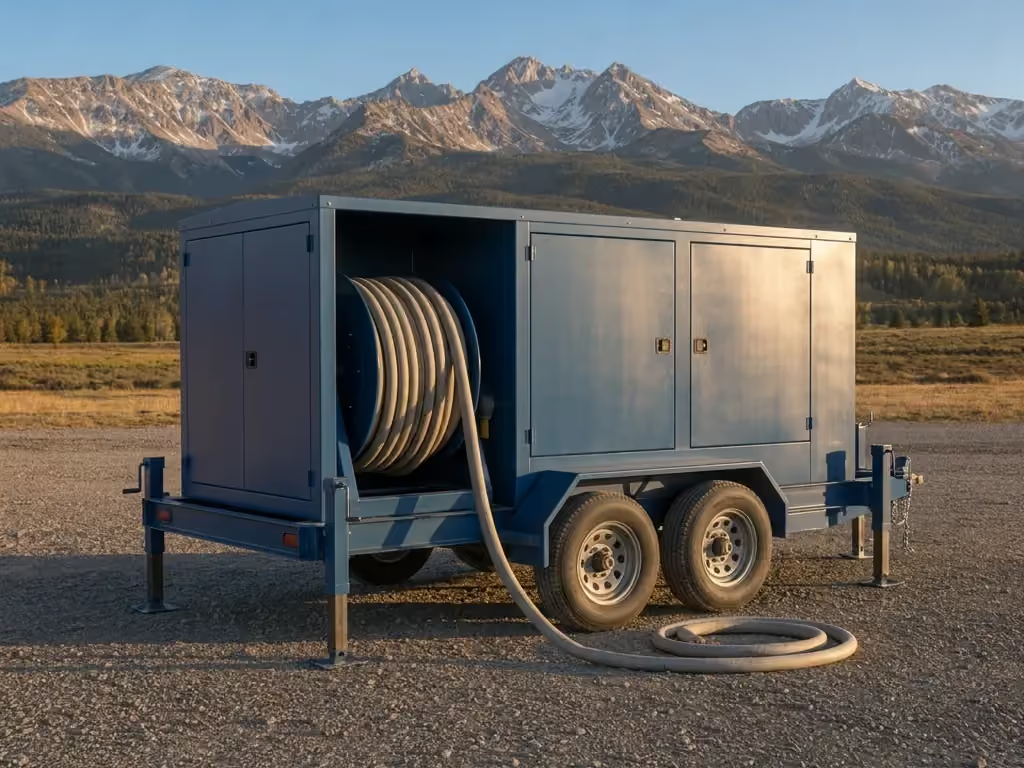
The rental package is the trailer-mounted hydronic heater, its insulated hose and the reel that manages that hose. The system is intended for ground thawing before excavation and concrete temperature protection during curing. Confirm the fuel type and tank arrangement of the assigned unit when you reserve.
| Package item | Role on the job |
|---|---|
| Trailer-mounted hydronic heater | Heats and circulates fluid for the planned operation |
| Insulated hose | Transfers heat across the prepared work area |
| Hose reel | Stores and manages the hose for delivery and return |
| Fuel | Customer-supplied; type and tank arrangement confirmed for the assigned unit |
| Thermal blankets | Not included in the published price |
Thermal blankets are not part of the published package price. If the project plan requires blankets, insulation, an enclosure, temperature sensors or other protection, source and schedule those items separately. Do not let the heater reservation become an assumption that every cold-weather concrete accessory is arriving on our truck.
We do not publish a thaw rate, coverage area, fuel-burn figure or hose length for this rental, because those belong to the unit assigned to your order and to your site: soil type, frost depth, moisture, ambient conditions and layout all change field performance. Build the schedule around observed conditions and the project's approved plan, not a generic production claim.
The customer supplies fuel and returns the unit at the fuel level recorded at delivery under Rental Agreement §7.5. Put fuel ordering, storage and daily checks into the winter logistics plan. A heater cannot protect the schedule if fuel responsibility sits unassigned between the concrete, earthwork and general-contracting teams.
Operation must follow the instructions for the delivered equipment under §7.2. A trained operator should complete the handoff, control startup and shutdown, inspect the hose route and respond to faults. JOLT may provide equal or greater substitute equipment at the same price, so do not assume controls from a previously rented model are identical.
Do WATCH, CONNECT or POWER attach to the heater?
No. Ground heaters are equipment, and upgrades stack only on rented storage or office containers. WATCH, CONNECT, POWER, READY and JOLT PACK do not mount to the heater trailer and are not included in its rate.
Use an office or storage container as the fixed platform when the site needs monitoring. A WATCH camera on the office can watch the heater area overnight, subject to its field of view and site placement. Keep the camera off the heater, preserve the heater's service access and post any recording notices or obtain consents that the site requires.
POWER on a container can run its camera, Starlink, lights and laptops without turning the heater into a power source. The kit is not intended to run HVAC, and it does not supply the hydronic heater. Fuel for the heater remains the customer's responsibility.
WATCH and POWER depend on sky view, weather and load, and uptime is not guaranteed under Rental Agreement §13. They help the superintendent manage a supporting container; they do not prove that hose, blankets or the curing area stayed in the condition required by the project's cold-weather plan.
For the crew space, read whether a container office works in winter and how to heat a container office. Those decisions are separate from the ground heater. The office heater warms people and workspace; the hydronic equipment serves soil or concrete.
What does the site need before the truck arrives?
Prepare firm, level, well-drained placement for the trailer with safe access to its controls, hose reel and fuel point. Keep it outside excavation limits, crane swing, haul lanes and snow-storage areas. The selected position should support the planned hose routing without creating an unmanaged crossing through a vehicle route.
Define the treatment area and sequence before delivery. The superintendent should know whether the first operation is pre-thaw, excavation support or curing protection, who approves the layout, and what separate materials are arriving. Resolve where removed hose, covers or snow will be staged as work advances.
Utilities must be located and marked, even when the heater itself is trailer-mounted. The customer remains responsible for permits, zoning, landlord permission and other site approvals. A representative must be present to direct placement, and the customer bears site damage caused by the placement it directs under Rental Agreement §5.
Hose needs protection from vehicles, sharp edges and active excavation. Establish crossings or exclusion zones under the site's safety plan, and brief every operator whose machine works nearby. Do not improvise attachment points or alter the heater, reel or hose to solve a routing conflict.
Winter maintenance continues after setup. Keep snow, ice and debris away from access paths and the equipment as required by Rental Agreement §7.4. Maintain room for fuel service and visual checks, and do not allow plowing to bury hose transitions or build a bank around the trailer.
If the heater supports a future container placement, review whether containers need a foundation before thawing an arbitrary rectangle. Also use the snow-load guide when containers, canopies or other structures are part of the winter site. Each work item needs its own approved basis.
How is a heater delivered to a mountain town?
Start at reserve once the address and 2–4 week window are known. The availability badge at the top of the page shows the live status. Our truck dispatches from our yard in Gypsum, and the reservation connects the selected equipment with the job's delivery zone.
Our driver needs a clear route and a site representative ready to direct placement. Report steep approaches, narrow gates, restricted turns, overhead hazards and winter road conditions before dispatch. Clear the placement and working path rather than asking the driver to choose between active operations when arriving.
Vail is Zone B — $550 each way, Breckenridge is Zone C — $750 each way, Leadville and Steamboat Springs are Zone D — $950 each way, and Boulder is Zone E — $1,200 each way. Pickup in Zones A–E uses the same fee as delivery.
| Zone | Towns | Delivery | Pickup |
|---|---|---|---|
| Zone A | Gypsum, Eagle, Edwards, Avon, Beaver Creek | $400 | $400 |
| Zone B | Vail, Minturn, Glenwood Springs | $550 | $550 |
| Zone C | Breckenridge, Frisco, Silverthorne, Keystone, Carbondale, Basalt, Aspen, Snowmass | $750 | $750 |
| Zone D | Steamboat Springs, Leadville, Grand Junction | $950 | $950 |
| Zone E | Idaho Springs, Georgetown, Evergreen, Golden, Morrison, Lakewood, Arvada, Aurora, Centennial, Littleton, Boulder, Castle Rock, Denver | $1,200 | $1,200 |
| Zone F — Mountain West12-month minimum | WY, ID, UT, MT | $1,795 | Pickup quoted separately before delivery |
During handoff, record the fuel level and identify the controls, hose reel and transport condition with the person who will own daily checks. Compare the delivered items with the package. If blankets or another separately sourced item are not present, resolve that gap before laying out the operation.
The customer may not move or lift the equipment without authorization. If construction phasing changes the location, contact JOLT before repositioning it. A casual tow across an active site can damage the trailer and hose, and an unauthorized move voids the damage waiver under Rental Agreement §5.5.
What happens while it runs and at pickup?
Assign an operator and use the instructions for every startup, shutdown and inspection. Check the trailer position, hose path, connections, fuel and surrounding work before each operating period. Document field conditions under the project's quality plan; the heater running is not proof that the ground or the pour reached the required temperature.
Coordinate the heater with excavation and concrete crews at every shift change. One team may be ready to uncover an area while another still depends on protection. A short written handoff should identify active circuits, exposed hose, fuel status, weather concerns and who has authority to change the layout.
Keep unauthorized work away from the equipment. Rental Agreement §7 prohibits welding, cutting, drilling, painting and removal of JOLT signage, telematics or cameras. Do not repair, splice or modify rented components in the field; report damage or an operating problem to JOLT.
Plan demobilization before the last protected operation. Give at least 15 days' written pickup notice, understanding that rent continues until retrieval. The heater and hose must be clean, accessible, free of customer attachments and prepared for transport according to their instructions.
Restore fuel to the delivered level and remove the customer's blankets, sensors, barriers and waste. Organize the hose on its reel as instructed rather than leaving it frozen into the site or trapped beneath material. The return path must remain open to our truck.
A failed pickup trip is charged under Rental Agreement §16. Confirm access after the final snow event and after subcontractors demobilize, because a plow bank or parked machine can close a route that was clear when notice was sent.
Retrieval ends the Rental Period; finishing the pour does not. Put written notice and truck access into the closeout schedule, then follow the full rental process so the field team, accounting contact and yard are working from the same dates.
Your first invoice, to the dollar
Pick the unit, enter the jobsite ZIP and the term. The lines below come from the same quote the reservation flow builds, so the total here is the total you see before you pay the deposit.
Ground heater
- Monthly rent
- $1,450
- Damage waiver (12%)
- $174
- Environmental fee (5%)
- $72.50
- Delivery
- Enter your ZIP
- Reservation depositPaid today, credited here
- −$1,000
- First invoice
- $696.50+ delivery
Then $1,696.50/month through a 1-month term. Delivery and pickup are priced by zone once you enter the job ZIP.
Guides
Read before you reserve
Pour concrete through a Colorado winter with a measured thaw-and-cure plan
Cold-weather planning starts when air may fall below 40°F during protection.
10 min read →
A Colorado jobsite setup checklist, in the order the site comes together
Set a Colorado jobsite up in this order: access and staging first, then the fence, the office, storage, power and internet, sanitation, lighting and heat.
19 min read →
Run the field office before utility power reaches the site.
A Grid-Free office runs its mini-split, lights, outlets and Starlink from roof solar and a 10 kWh battery, with no shore power required; its WATCH camera charges from its own solar panel.
11 min read →
Questions contractors ask
How much does a ground heater cost to rent?
The published in-season rate is $1,450/mo with a 1-month minimum. The $1,000 reservation deposit is applied to the first invoice, and delivery is extra.
What does in season mean on the ground-heater price?
The $1,450/mo rate is the published rate for the winter heating season. We do not publish an off-season rate; ask before reserving for summer work.
How soon can JOLT deliver a ground heater?
The standard delivery window is 2–4 weeks from reservation. Ground heaters are not eligible for JOLT Express.
Are thermal blankets included?
No, the published package includes the heater, insulated hose and reel. Thermal blankets are not included in the published price.
Who supplies fuel for the heater?
The customer supplies fuel and returns the heater at the delivered fuel level. The customer must operate it according to its instructions.
Can the heater thaw ground and protect concrete?
Yes, the hydronic heater can thaw frozen ground before excavation and keep a pour warm during curing. Site conditions and the approved work plan determine how it is deployed.
Can WATCH or POWER be installed on a ground heater?
No, upgrades do not stack on ground heaters. WATCH and POWER can be fitted to a rented office or storage container supporting the same job.
How much pickup notice does JOLT require?
Give at least 15 days' written notice. The heater must be clean, accessible, properly prepared for transport and returned at the delivered fuel level.
Keep reading
- SolutionRentals for construction jobsites
- GuideA Colorado jobsite setup checklist, in the order the site comes together
- GuideCan a container office handle Colorado snow? The numbers.
- UpgradeWATCH: your site has eyes
- UpgradePOWER: two days of power with no sun and no hookup
- AnswerDo shipping containers need a foundation? Usually no — here's when they do
- AnswerHeating a container office at 8,000 feet in January
- JOLTPrices. All of them.
Reserve it today.
$1,450/mo · 1-month minimum · $1,000 deposit
A deposit holds your delivery window. Cancel free of charge more than 14 days before the first day of the window. Deposits from $85 are applied to your first invoice.
Mon–Fri 7:00am–7:00pm MT. Text 970-279-1015 or email reserve@joltrents.com.