
Data center guide · Nationwide
What a data center site office costs to rent in 2026.
Compare mobile office rent, delivery, setup and add-ons. Grid Core is $1,950/mo; Command is $2,750/mo.
- Grid Core
- $1,950/mo
- Grid Command
- $2,750/mo
- DC Deploy
- Quoted per campus
- On-site window
- 6–8 weeks
- Legal-width loadNo oversize permits
- On site in6–8 weeks
- One invoiceper unit
- Badge-ready
- Stackabletwo-high
- Moves withyour phases

Key facts
- The Core the Grid — 40 ft data center site office rents for $1,950 per month as of .
- The reservation deposit on the Core the Grid — 40 ft data center site office is $2,500 as of .
- The minimum rental term on the Core the Grid — 40 ft data center site office is 12 months as of .
- Grid delivery window is 6–8 weeks after the reservation as of .
Cite this page: "What a data center site office costs to rent in 2026." JOLT (Jolt Rents), https://joltrents.com/data-centers/mobile-office-rental-cost/. Last updated September 25, 2026.
A basic container office or office trailer quote starts with rent and leaves delivery, setup, removal, furniture, cameras, internet and access control to separate lines. Grid Command at $2,750/mo includes the cameras, Starlink, furniture, badge prep and generator connection. DC Deploy covers delivery, setup and pickup anywhere in the lower 48 and is quoted per campus in one business day. This page walks through every line so the quotes compare.
The number a site logistics manager sees first, the monthly rent, is the smallest part of what a mobile office costs on a data center site. The rest arrives on five other invoices over the first ninety days. Add them up before choosing.
What do mobile offices rent for in 2026?
| Unit | Floor area | Monthly rent | What it includes |
|---|---|---|---|
| 8 × 20 single-wide trailer | 160 sq ft | Varies by vendor and market | The box, a package unit, lights, outlets |
| 10 × 40 or 12 × 40 trailer | 400 to 480 sq ft | Varies by vendor and market | The box, a package unit, lights, outlets |
| 12 × 60 single-wide trailer | 720 sq ft | Varies by vendor and market | The same, often with a restroom option |
| 24 × 60 double-wide | 1,440 sq ft | Varies by vendor and market | The same, with a restroom and conference room |
| 20 ft container office, plain | 160 sq ft | Varies by vendor and market | Insulated box, mini-split, lights, outlets |
| 40 ft container office, plain | 320 sq ft | Varies by vendor and market | The same |
| 40 ft storage container | 320 sq ft | Varies by vendor and market | A box |
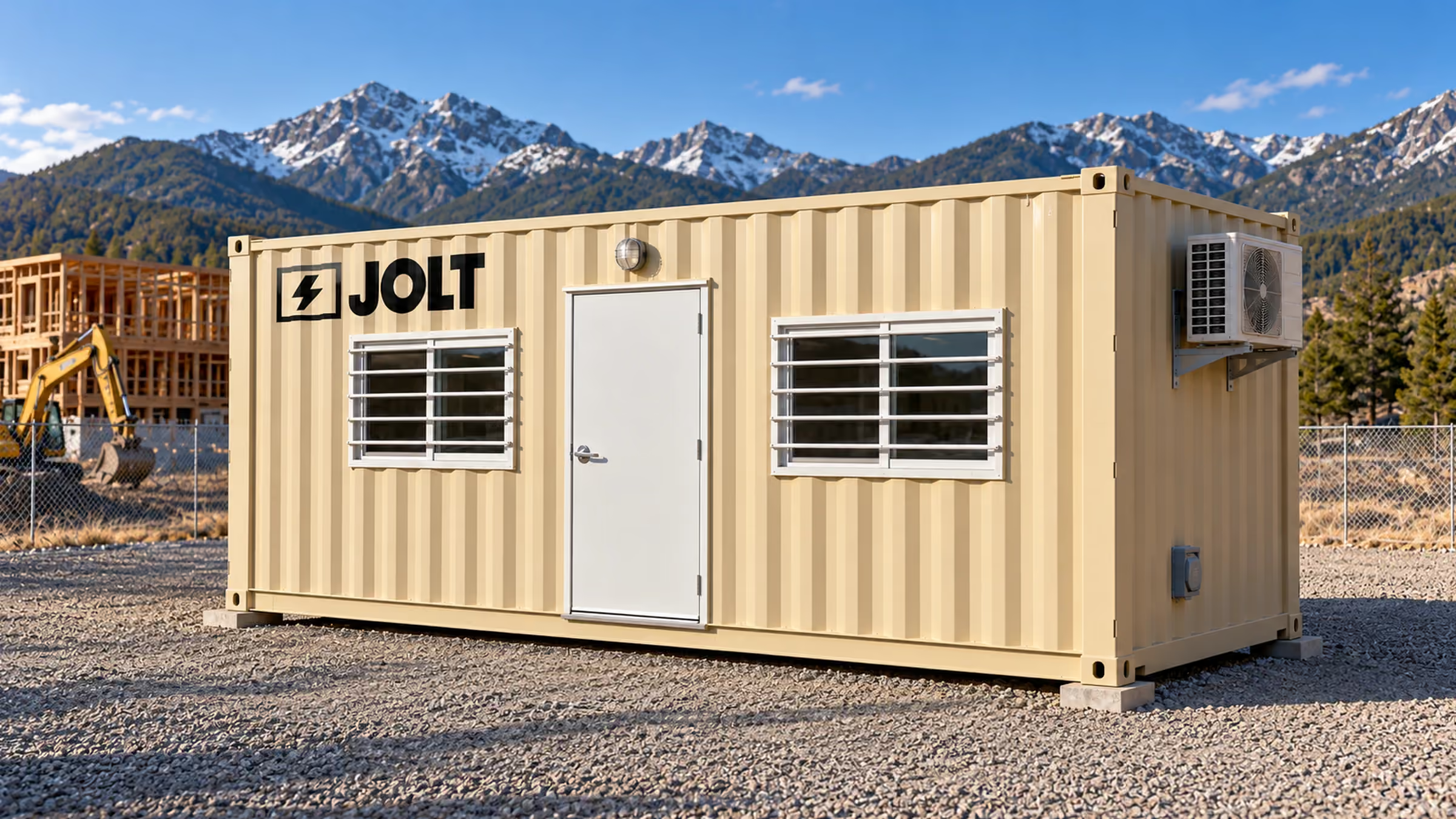
| JOLT Grid Core | 320 sq ft | $1,950/mo | Two doors, four grated windows, two cold-climate heat pumps, 100 A power, Cat6A to six drops, rack, Wi-Fi, four workstations, plan table and safety kit |
| JOLT Grid Command | 320 sq ft | $2,750/mo | Core plus badge-ready doors, four LTE cameras, Starlink, generator inlet, six workstations, 75-inch display, lockers, coffee counter and your logo |
The market comparisons come from 2026 third-party cost guides and published product listings, but trailer and plain-container rent varies by vendor, term, season and market; the written quote is the only figure that counts. Every trailer and plain-container quote should be checked for delivery.
What does delivery really cost each way?
Trailer delivery is priced by the mile from the vendor's yard on the permitted route, plus setup, and removal at the end may be a separate charge that is not on the first quote. A 12 x 60 is an oversize load in every state, so the mileage is on a permitted route, the move is daylight-only in most states, and the setup crew's blocking, tie-downs, skirting and steps are inside the setup line or separate from it depending on the vendor. A double-wide is two permitted loads and a marriage-line crew.
Container offices deliver on a flatbed or tilt-bed with no oversize permit, so their delivery line is generally more predictable, while pickup may still be billed separately.
DC Deploy puts freight, placement, leveling, anchoring, electrical rough-in walkthrough and end-of-term pickup into one per-campus quote; see nationwide delivery.
What add-ons does a data center site end up buying?
Every one of these, within ninety days, on most hyperscale and colocation sites:
| Add-on | Why the site buys it | Separate-vendor cost |
|---|---|---|
| Four-camera security system with LTE and retention | The owner's security plan and the GC's carrier | Confirm in the written quote |
| Starlink or a business hotspot | Site fiber can trail mobilization | Confirm service and hardware in the written quote |
| Furniture | The unit may arrive empty | Confirm in the written quote |
| Access-control door prep | Badge readers go on office doors | Confirm electrical work in the written quote |
| Generator connection with an interlock | The office may land before temporary power | Confirm in the written quote |
| A large display | Coordination and the morning huddle | Confirm in the written quote |
| Steps or a ramp, skirting and tie-downs | The install manual and AHJ may require them | Confirm whether these are inside setup |
| Damage waiver or insurance | The vendor requires protection | Confirm the rate or insurance requirement |
Spread over the term, the add-ons can materially increase the total above rent. That is the number the first quote never shows.
What does a plain container office cost, and when is it enough?
A plain 40 ft container office is an insulated box with a mini-split, lights, outlets, a door and a window or two, and its rent and local delivery vary by vendor and market. On a site that already has temporary power, fiber, cameras at the gate and a badging system, it can be a practical office for four people. The second-tier trades that arrive for the fit-out on a colocation building, and the commissioning teams that arrive after the GC's campus has been running for a year, are the customers it fits.
It is not enough on a greenfield site before temp power, at a gate, or on any office the owner's security plan covers, because it has none of the things those require, and the add-on table above is what it costs to add them.
What do term and season do to the price?
Term first. Third-party guides say month-to-month pricing can run above a longer contract, and vendors may discount further at longer terms. A data center office is on site 14 to 36 months, so the 12-month rate is the one to quote against; a month-to-month number on a first quote is a number that will change. JOLT's minimum term is 12 months, with a 5% annual escalator on each anniversary.
Season second. Trailer and container rents can rise during busy construction months as projects compete for the same fleets and delivery slots stretch. Data center construction does not pause for winter, and a site that reserves in October for a January mobilization gets the fleet's attention. JOLT's on-site window is shown on the confirmation.
What does a stacked campus cost compared with a double-wide complex?
A double-wide complex has a conference room and restroom and can suit a project team that fits in one fixed location, but its rent, delivery, marriage, setup and removal must all be read from the vendor's written quote. Six Grid Commands in three stacked pairs seat 36 at desks and 48 at tables; their rent is $16,500/mo plus three Stack Kits. DC Deploy is quoted per campus in one business day, and Stack Kit setup applies to each pair.
The double-wide is cheaper by a wide margin for a project team that fits in it and will not move. The Grid Campus costs more and holds nearly twice the people on a smaller pad, arrives on six flatbeds without a permit, and carries 24 cameras, six Starlink links and twelve badge-ready doors. On a large campus, the decision is made on the security plan and the pad, not the rent.
What is the all-in monthly for a typical data center office?
The plain container office is the cheapest way to get 320 square feet of steel on a site that already has power, fiber, cameras and badging. The trailer is the cheapest way to get 720 square feet. For a 12-month Command term, rent is $33,000, protection and environmental fees are $5,610, and the term total is $38,610 before tax, add-ons and the per-campus DC Deploy quote.
What do 12, 24 and 36 months cost?
| Build | 12 months | 24 months | 36 months |
|---|---|---|---|
| Grid Core | $27,378 | $56,124.90 | $86,309.22 |
| Grid Command | $38,610 | $79,150.50 | $121,718.10 |
One unit: rent for the term (the 5% annual escalator applies after month 12), the 12% damage waiver, and the 5% environmental fee. DC Deploy (freight, set, leveling, anchoring, an electrical walkthrough and pickup) is quoted per campus in one business day and is not in these figures. The $2,500 deposit is applied to the first invoice, not added; add-ons are separate lines. The 12-month minimum is the shortest term.
| Campus | Monthly rent | Volume credit /mo | Deposits | Stack Kit setup |
|---|---|---|---|---|
| Grid Core × 2 | $3,900 | — | $5,000 | $0 |
| Grid Command × 12, stacked | $35,370 | $1,650 | $30,000 | $9,000 |
A Grid Campus is 2 to 12 units. Monthly rent is the units' rent plus a Stack Kit per stacked pair, before the damage waiver and the environmental fee and before the volume credit: 5% of rent for the first 12 months when one order holds 6 or more Grid Command units. Deposits are $2,500 per unit. Stack Kit setup is charged per stacked pair; DC Deploy is quoted per campus in one business day.
The JOLT columns include everything on JOLT's invoice except sales tax and any add-ons. The deposit is applied to the first invoice.
Why does a data center site pay more than a house build?
Because the owner's requirements are different and the site is different. A hyperscaler's site security plan puts badge readers and cameras on every office door before the first orientation; a custom-home site puts a padlock on the trailer. A data center office lands on a greenfield 60 to 120 days before fiber and often before temp power; a house has a pole at the curb. A data center office is on site 14 to 36 months and moves as the buildings turn over; a house office is on site nine months and never moves. And a data center site is often far from the nearest trailer yard.
None of that changes the rent on a plain trailer. All of it changes what the site buys next, which is why the all-in numbers on this page are two to four times the rent.
What hidden lines show up on a mobile office invoice?
Ask before signing about removal; setup separate from delivery; skirting, steps and tie-downs; a damage waiver or a deposit and COI; environmental or administrative fees; fuel surcharges; relocation; an annual escalator; a minimum term and early-termination balance; cleaning or reconditioning at pickup; and sales tax on rent, delivery or both.
JOLT's protection, recurring fees, deposit and one-time charges are itemized on the data center pricing page.
How do you compare quotes?
Ask every vendor for the same fourteen numbers and put them in one column: monthly rent; minimum term; annual escalator; delivery; setup; removal; skirting, steps or ramp, and tie-downs; damage waiver rate or insurance requirement; environmental and administrative fees; relocation charge; furniture; cameras; internet; access-control door prep. Then add the four things a data center site will require that are not on any trailer quote: the generator connection, the display, the anchoring detail for the AHJ, and the certificate of insurance naming the GC and owner.
Divide the total for the term by the months. The number that comes out is the cost of the office; the rent was never it.
What does JOLT charge, and what is included?
Compare the two builds, term totals, protection and add-ons on JOLT's data center pricing page.
Where does the money go on a Grid?
Rent on a Command pays for four things a trailer's rent does not. The unit itself, built to a data center specification with two doors, grated windows, two heat pumps and a 100 A panel. The Command package, which is the four vendors: cameras with LTE and cloud clips, the Starlink hardware and its monthly service plan, the badge-ready door hardware, and the furniture with the display.
That is why Command is $800/mo more than Core and why crews reserve it anyway: the premium puts the data-center-specific systems on one line, working when the unit lands.
How do you reserve?
Choose a build, site ZIP, quantity and target date, then follow the protection and deposit path on the data center hub.
Use a cost taxonomy before comparing monthly rent
Sort every line into five categories: occupancy, mobilization, site integration, risk and closeout. Occupancy is rent plus recurring options. Mobilization covers the inbound work required to place the office. Site integration includes customer work such as power, fiber and access-control completion. Risk includes a waiver, insurance requirements and schedule exposure. Closeout covers removal and any work needed to make the unit ready for return.
This structure exposes omissions without estimating a competitor's price. If a proposal has no closeout line, ask whether removal is included or will be quoted later. If it has no integration scope, ask who provides furniture, connectivity, cameras and badge hardware.
For a Grid, DC Deploy covers the inbound move, setup services and end-of-term pickup. Command rent carries the camera, connectivity, badge-prep and furniture scope listed on its build. The customer should assign electricity, generator fuel and site fiber. Reader and credential responsibilities should be settled with the access-control vendor.
Keep the reservation deposit outside the cost total because it is applied to the first invoice. Keep the protection deposit alternative separate as well. Two payments called deposits can have different purposes and accounting treatment.
Normalize cost over the planned occupancy period
Choose a single evaluation period before opening proposals. Enter every recurring line for that period, then add inbound work, setup, removal and selected options. Apply each bidder's stated rate changes at the dates in its proposal rather than multiplying the opening rent by all months.
Use the same occupancy dates for all choices. A proposal with a shorter minimum can be valuable when the expected need is brief, while a longer commitment may fit a full building phase. JOLT's minimum and early-termination rules are stated in Rental Agreement section 3.
Run a release-at-minimum case and a current-schedule case. For a longer program, add a case that passes the next anniversary. The Grid anniversary adjustment is 5%, so the timing of delivery matters to the forecast.
Divide the normalized total by the same number of months only after all categories are present. That result is a comparison tool, not the contractual monthly invoice. Keep cash timing in a separate view so deposits and one-time deployment work do not distort the recurring run rate.
Ask which necessary services remain excluded
A strong quote names exclusions as clearly as inclusions. Ask who supplies the pad, access route, permits and marked utility information. Ask whether delivery means arrival at the gate or placement at the approved office location.
For power, record the inlet supplied with the office and the work owned by the site electrician. Command has a generator inlet with a mechanical interlock, but the electrician still needs a site-specific load plan. Review the customer-supplied utility duties in Rental Agreement section 7.
For networking, separate hardware from service. Ask whether the proposal includes a router, a data plan and backup connectivity. Then identify who provides site fiber, who terminates it and who administers the network.
For access control, ask whether “ready” means a pathway only or includes specific door hardware. Command includes electric strikes, door contacts and low-voltage pathways. Ask the access-control vendor to document reader and credential scope.
For security cameras, ask about recording location, connectivity and customer governance. The agreement's technology provisions address recording notices, signage and consents.
Test cost sensitivity without guessing a final total
Create one variable at a time. Change the occupancy end date, number of units, placement configuration, connectivity choice or relocation count while holding the other inputs steady. The exercise shows which decision controls the budget.
Term sensitivity begins with the minimum commitment and anniversary date. Unit-count sensitivity includes rent, protection, deployment and any per-unit options. Stacking sensitivity adds a Stack Kit and setup for each full pair rather than treating stacked placement as free.
Connectivity sensitivity should compare included data scope with the project's expected use. Command includes priority data and offers an Unlimited Starlink upgrade. Do not assume either replaces the permanent site network; decide from the site's applications and fiber plan.
Schedule sensitivity should include pickup readiness. Rent continues until retrieval under Rental Agreement section 16. A planned release date is useful only when the unit can be made accessible, empty and free of customer property.
Audit invoices and closeout against the quote
At the first invoice, match the build, quantity, rent, selected add-ons, protection election, one-time lines, deposit credit and tax location. Check percentage bases rather than rates alone. The Grid damage waiver and environmental fee use rent plus recurring add-ons as their base.
Keep a change log beside the invoice file. Record a relocation, added workstation pack or generator period with the field event and approver that caused it. That prevents a valid change from becoming an unexplained cost variance.
Before pickup, assign the closeout work. Remove customer property and attachments, recover records and keys, and make the location accessible. The return obligations and notice requirement are in Rental Agreement section 16.
How much does a mobile office trailer cost to rent in 2026?
Trailer rent varies by size, term, season, vendor and market before delivery, setup, removal and add-ons. Compare written quotes at the same term and scope.
How much does a 40 ft container office cost to rent?
A plain unit's rent varies by container yard, market and delivery distance. JOLT's Grid Core is $1,950/mo and Grid Command is $2,750/mo, with cameras, Starlink, furniture, badge prep and a generator connection built into Command.
What does delivery cost?
Trailer delivery varies by route and may leave removal as another charge. DC Deploy is quoted per campus in one business day and covers delivery, setup and pickup to a lower-48 site.
What add-ons does a data center site end up buying?
Common additions include cameras, connectivity, furniture, access-control door prep, a generator connection, a display and required access equipment. Price each item in the written quote instead of comparing rent alone.
What is the all-in monthly for a data center office?
The full project amount combines rent, delivery, setup, pickup, protection and any add-ons. A 12-month Grid Command term is $38,610 for rent and recurring fees before tax and optional add-ons; DC Deploy is quoted separately per campus.
Why is a data center site office more expensive than one on a house build?
The owner's security plan, the greenfield site with no fiber or temp power, the 14–36 month term with relocations, and the distance from the nearest yard. The rent is the same; the add-ons are not.
What hidden lines should I ask about?
Removal, setup separate from delivery, skirting and steps, the waiver rate, environmental and admin fees, fuel surcharges, relocation charges, the escalator, the minimum term and cleaning at pickup.
What does JOLT include that others do not?
Grid Command includes four LTE cameras, Starlink service, badge-ready doors, a generator inlet, six workstations, a 75-inch display, lockers, a coffee counter and your logo. Delivery, placement, anchoring and end-of-term pickup are part of DC Deploy.
Your delivered price
Pick the unit, rent or buy, and the job ZIP. Monthly rent and the route show as you go; we email the full delivered price with a 14-day lock.
Pick a length
Drawn to scale, side view.
Step 1: Unit
The Grid · Command
Which 40 ft?
Step 2: Rent or buy
12-month starting term for project quotes.
Step 3: Job ZIP
Delivery and pickup: quoted for your site.
Step 4: Send it
Request a written delivered quote from the project desk.
Step 5: Your project quote
- JOLTSite offices for data center construction. Nationwide.
- DataCenterProductNationwide Grid Command: badge-ready, connected, and ready the day it lands.
- DataCenterGuideNationwide data center site office pricing. All of it.
- DataCenterGuideDC Deploy for any campus in the lower 48.
- DataCenterMarketData center site offices in Texas: The Grid, nationwide.
- DataCenterMarketData center site offices in Virginia: The Grid, nationwide.
- DataCenterMarketData center site offices in Ohio: The Grid, nationwide.
- DataCenterGuideThe alternative to a national mobile office chain on a data center site.
Talk to a data center specialist.
DC Deploy covers any site in the lower 48.
A deposit holds your delivery window. Cancel free of charge more than 14 days before the first day of the window. Deposits from $85 are applied to your first invoice.