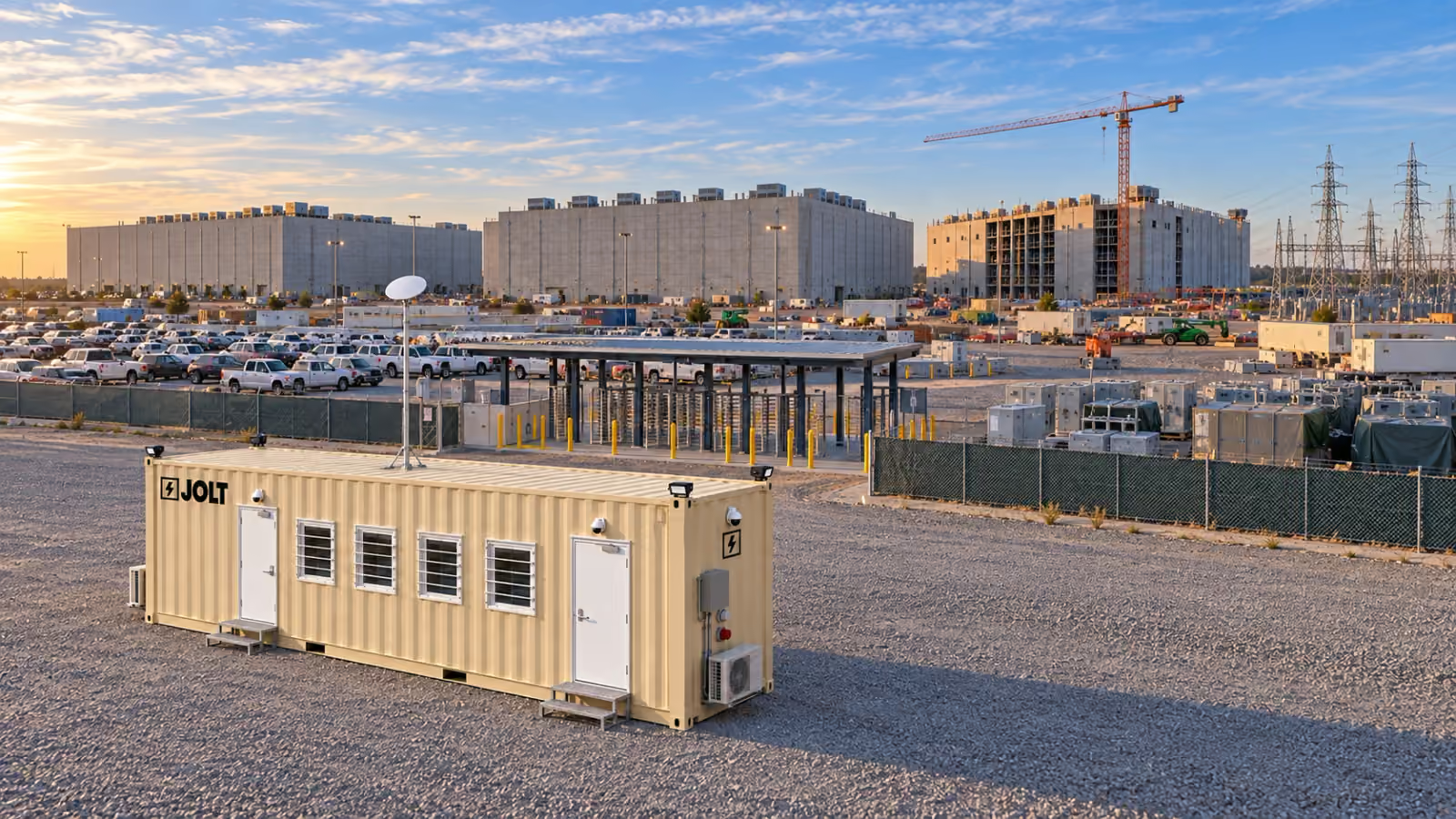
Grid Core sells for $48,000 and Grid Command for $64,000, with DC Deploy on a purchase, or either build can be acquired through its 36-month lease-to-own plan. Owning can suit a multi-campus program because the same office can move with the work.
Most site offices are rented because most jobs end. Data center programs do not end; they move. A general contractor with a national account at a hyperscaler will mobilize to Loudoun, then Columbus, then Abilene, over five years, and the office that landed at the first campus is the office that should land at the third. That is what this page is about.
When does buying a Grid beat renting?
The answer depends on how long the office will serve the program, how often it moves and how the buyer accounts for an owned asset. Compare the purchase and lease-to-own paths with the current rental pricing, then use the written quote for the decision.
Buying can fit a long-running program when ownership suits the capital plan. Renting preserves flexibility for a single project.
What do Core and Command cost to buy?
A purchased Command is the same unit as a rented one: badge-ready doors, four cameras and NVR, Starlink mast and router, generator inlet, six workstations, 10 ft table, 75-inch display, lockers, coffee counter, two cold-climate heat pumps, 100 A panel, Cat6A to six drops. Your logo is included. A purchased Core is the office with four workstations, six drops and BRAND at $450 if you want the logo.
How does lease-to-own work?
A 36-month lease-to-own plan is $2,095/mo for Core, totaling $75,420, or $2,795/mo for Command, totaling $100,620. Title transfers on the final payment.
A lease-to-own unit can move between campuses like any other Grid. Confirm payment, title and move terms in the written agreement.
What is the rent-versus-buy break-even?
Program duration, protection, escalators and campus moves change the comparison. Compare the purchase and lease-to-own rows above with the current rental terms.
Who buys a Grid instead of renting one?
Four kinds of customers, and each one is a program, not a project.
General contractors on a hyperscaler's national account. A GC that builds for one owner in Virginia, Ohio and Texas over five years is on a program. The project office it sets at the first campus is the office it should set at the third, with the owner's badge readers already mounted and the GC's logo already on the steel.
Electrical contractors with multi-campus backlog. The largest trade on a data center build carries the largest crew and the longest backlog. An electrical contractor with three campuses booked buys the office that mobilizes first, keeps the generator inlet and the prefab display, and moves it with the crew.
Owners and their operations teams. A hyperscaler or a colocation developer sometimes wants a permanent secure office on the operations side of a campus, for the commissioning agents during Level 4 and 5 and for the facilities team after. A purchased Command on a pad by the substation is that office for ten years.
Colocation developers with a build cadence. A developer that breaks ground on a 30-megawatt building every 18 months buys two Grids and rotates them.
Everyone else rents. A GC on one building, an owner's rep on one engagement, a sub on one scope: rent, and let pickup ride inside the Deploy you already paid.
What changes when you own it?
No minimum term, no escalator, no pickup. The unit sits on the last campus until the next one is ready, or sits in your yard between programs at no cost. You carry the insurance, as you would on any owned equipment; the damage waiver and the environmental fee stop with the rent.
Can I buy the Grid I am renting?
Call 970-279-1015 or email reserve@joltrents.com and JOLT quotes the purchase options for an existing rental in writing.
What warranty and support come with a purchased Grid?
Call 970-279-1015 or email reserve@joltrents.com for warranty coverage, service response and manufacturer terms in writing.
Can a purchased Grid keep JOLT's cameras and Starlink?
Command includes its four-camera system, NVR, Starlink mast and router. Call 970-279-1015 or email reserve@joltrents.com for ongoing service and account terms in writing.
How is a purchased Grid delivered and moved?
DC Deploy on a purchase covers inbound freight and setup; see nationwide delivery for the package and on-site window.
After delivery, the owner plans later moves with qualified carriers, riggers and site teams. The Grid is a legal-width load.
What financing does Stone Ridge Leasing offer?
JOLT offers the two 36-month lease-to-own plans shown above. Call 970-279-1015 or email reserve@joltrents.com for other purchase options in writing.
What is the resale value of a Grid?
Resale value depends on condition, age, equipment and the market at the time of sale. Get an independent appraisal before carrying a residual value.
The chassis is a standard 40 ft high-cube ISO container, and maintenance records help a future buyer evaluate the modified office.
Build an ownership case from scheduled use
Start with a dated program map rather than a single break-even month. List each awarded campus, the office mobilization date, the expected release date and the next credible assignment. Mark the periods when two projects overlap. One owned office cannot serve both, even when the annual utilization forecast looks full.
Separate committed work from pursuits. A signed backlog can support an ownership decision. A pipeline weighted by probability belongs in a downside case, because a lost pursuit may leave the office without an assignment while storage, care and insurance remain the owner's responsibility.
Treat travel between campuses as a project event. Record who will select the carrier and rigger, who will prepare the receiving site, and which budget holds the move. For a purchased unit, later transportation is owner-planned rather than part of the original DC Deploy.
Then compare three written scenarios: rent through the first project, lease to own through the stated plan, and buy at the start. Use the same dates and add-ons in each scenario. Do not compare a furnished Command purchase with a bare office rental or assume that a later project needs the same security and connectivity scope.
Match ownership to the people who control the program
Name the asset owner before requesting a quote. The corporate entity paying for the office may differ from the project entity controlling the site. That distinction affects who accepts the Bill of Sale, carries the asset, approves a move and maintains records after the first project closes.
Assign a business owner as well as an equipment custodian. The business owner controls where the Grid goes next and whether its configuration still matches the program. The custodian tracks keys, included furniture, network hardware, manuals, condition photographs and maintenance history.
Give the receiving project a defined acceptance role. Its superintendent should verify that the planned location, access, utilities and local approvals are ready before a move is released. Its technology lead should decide how the six Cat6A drops and site-fiber-ready rack join the new campus network. For Command, the access-control vendor owns the reader and system integration around the badge-ready doors.
Define the title-transfer boundary in writing
A purchase and a lease-to-own plan do not transfer title at the same moment. Under Rental Agreement Terms section 15, lease-to-own and sales transactions use a separate addendum or Bill of Sale, and the rental terms continue until title transfers in writing. The same section says sold equipment is provided as stated there, with any express exception belonging in the Bill of Sale.
Ask the written document to identify the unit, transaction type and transfer event. Procurement should be able to connect the physical unit to the document without relying on a project nickname. The document should also resolve any condition requirements, included accessories and expressly stated coverage before approval.
Do not treat a final scheduled payment as a substitute for transfer paperwork. The payment record shows money moved. The signed transfer document establishes the ownership record described by the agreement.
Request a complete Bill of Sale package
Send a written document request with the purchase order. Ask for the seller and buyer names, the Grid build, the unit identifier, the transfer date, the purchase consideration, the included accessories and any expressly stated warranty language. If an item matters to approval, require it in the signed document rather than an email summary.
Attach a condition record to the internal file. Date-stamped exterior and interior photographs, a list of keys, and a check of included furniture give the next campus a usable baseline. For Command, record the camera and NVR hardware, Starlink mast and router, display, lockers and appliance items that are included in the build. Do not add an assumed subscription or service promise to that list.
Include the lease-to-own addendum when that path applies. The file should show the payment schedule, the written title-transfer condition and the relationship between the addendum and the governing agreement. Route conflicts or unanswered terms to counsel before the deposit is approved.
Plan the first campus and the next campus separately
The first delivery still needs the normal site inputs: ZIP, target date, chosen build, placement method, bearing surface, access, electrical plan and local approval status. For that initial purchase delivery, DC Deploy covers freight and a tilt-bed or crane set. Leveling on cribbing is part of the scope, as are anchoring at four points and an electrical rough-in walkthrough.
The second campus is not a repeat order. It is an owner-managed equipment move with a new origin, destination, route, lift plan and receiving-site review. A pad that worked in one jurisdiction does not prove that another authority will accept the same permit or anchoring documentation.
Capture configuration changes between projects before transport is booked. A Core that joins an established campus may use site fiber and the owner's existing badging arrangements. A Command assigned to an early greenfield mobilization brings its included badge-ready pathways, WATCH hardware, CONNECT hardware and generator-ready inlet. The receiving team still supplies and coordinates the site systems and utilities that those features connect to.
Budget for the responsibilities that continue after purchase
The purchase price is not a lifetime operating budget. The owner should plan electricity, connectivity accounts, inspection, cleaning, repairs, insurance, storage and later transport as separate cost categories. Command includes specific connectivity and security hardware, but ongoing service and account terms must be obtained in writing.
Create a maintenance log from the first day. Record reported issues and work performed by date, and retain instructions for included equipment. A consistent log helps the next superintendent understand condition and gives an independent appraiser better evidence than memory.
Define who may authorize physical changes. Cutting, drilling, new penetrations and electrical alterations can affect safety, code review and later use. Require an owner-approved scope and qualified trade review before modifying an owned unit. Preserve the original equipment information with every approved change.
Weather care follows the office to every site. The custodian should include roof and condenser clearance, door access, drainage around the bearing area and post-storm condition checks in the local site plan. These are owner procedures after purchase, not a substitute for an authority's requirements or an engineer's site-specific direction.
Security administration also survives the construction project. Decide who controls camera access, footage retention, network credentials and badge-vendor records when the project team demobilizes. If Command's recording features operate at a site, establish notices and consent procedures with counsel rather than assuming the prior campus's policy follows the equipment.
Use a written quote-comparison worksheet
Normalize every proposal to one chosen build and one program schedule. Put purchase, lease-to-own and rental alternatives on separate worksheets, but use identical assumptions for the initial location, selected add-ons, branding and expected campus moves.
For the equipment line, identify Core or Command and copy the included scope exactly. For delivery, distinguish the initial DC Deploy from owner-planned later moves. For operating costs, ask each internal owner for its assumption instead of filling gaps with a bundled estimate.
Flag exclusions visibly. Insurance, taxes, permits, customer-supplied utilities, ongoing third-party accounts, later transport and owner maintenance should not disappear merely because they are outside a seller's headline price. An exclusion is not necessarily a disadvantage, but it must sit in the decision record.
Finish with approval questions. Does the awarded backlog cover the intended use period? Is there a named next assignment? Does the receiving project accept the configuration? Has counsel reviewed the title document? Has accounting set the asset treatment? Has risk management set the post-transfer insurance plan? If those answers are incomplete, rental may preserve useful flexibility while the program becomes firmer.
How do I order?
Choose Core or Command and send the site ZIP, quantity, target date and project details through the data center reservation path; a specialist responds within 15 minutes during business hours.
What is the break-even between renting and buying a Command?
Compare the Command purchase price and current rental terms for the expected program duration and moves. Ownership can fit a long-running program; renting preserves flexibility for one project.
What does lease-to-own cost?
Core is $2,095/mo for 36 months, totaling $75,420, and Command is $2,795/mo for 36 months, totaling $100,620. Title transfers on the final payment.
Can we finance a purchase in-house?
JOLT offers the purchase and 36-month lease-to-own choices shown on this page. Call 970-279-1015 or email reserve@joltrents.com for other purchase options in writing.
Do WATCH and CONNECT keep working after we own the unit?
Command includes the camera hardware, NVR, Starlink mast and router. Call 970-279-1015 or email reserve@joltrents.com for ongoing service terms in writing.
What warranty comes with a purchased Grid?
Warranty terms are supplied with the written purchase agreement. Review the covered systems, duration and service process before ordering.
Is delivery included in the purchase price?
No. DC Deploy is quoted per campus separately for a purchase, and the delivery page explains the current inbound scope.
Can a purchased Grid be moved by our own crane crew?
An owner can arrange later moves with qualified carriers and riggers using the unit's corner castings and the rigger's lift plan. Confirm access and site requirements before mobilization.
What is a Grid worth after five years?
Condition, maintenance, equipment and the resale market determine what an owned Grid is worth. Get an independent appraisal for a five-year residual.